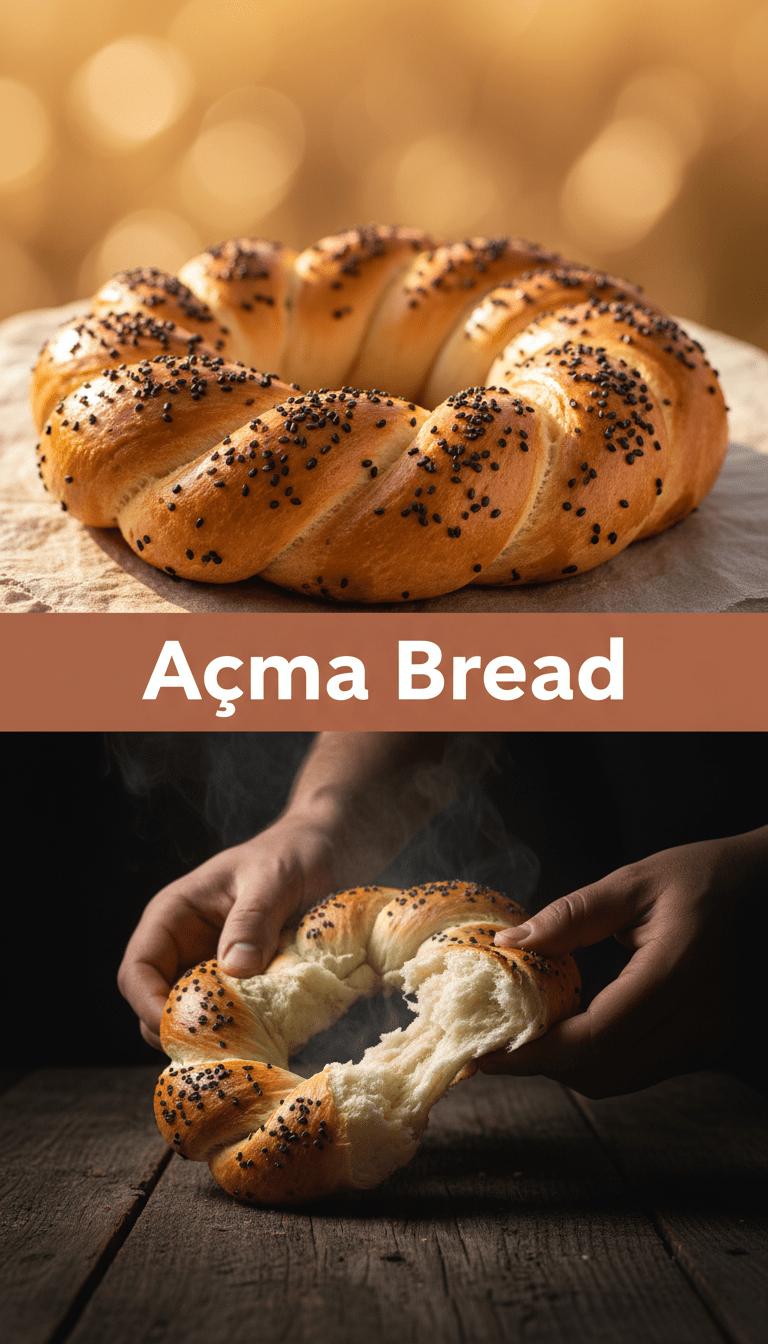
Hey food lovers! Are you ready to dive into a baking project that yields the most incredibly soft, slightly tangy, and utterly irresistible bread you’ve ever encountered? Today, we’re making Açma Bread (pronounced ahch-mah). This isn’t just any roll; it’s a staple of Turkish bakeries—a melt-in-your-mouth, layered delight that feels almost like a cross between a soft dinner roll and a croissant, but way easier to make! Trust me, once you try this homemade version, the store-bought ones won’t even compare.
Quick Facts
Here’s the lowdown on how long this deliciousness will take:
Prep time: 35 minutes (plus 2 hours rising time)
Cooking time: 20–25 minutes
Total time: Approximately 3 hours
Serving size: Makes 12 medium rolls
Why You’ll Love This Recipe
This Açma recipe is the real deal!
- Incredibly Soft Texture: Thanks to the secret ingredient—a touch of yogurt or kefir—these rolls stay moist and unbelievably fluffy for days.
- Buttery Layers: We achieve those gorgeous, slightly flaky layers by incorporating softened butter between the dough layers before rolling.
- Simple Shaping: While they look fancy, the shaping process is straightforward and fun—no complex folding required!
- Perfect for Any Occasion: They are fantastic for breakfast, lunchboxes, or just enjoying with a cup of Turkish tea.
Ingredients You’ll Need
This recipe uses standard pantry items, but don’t skip the yogurt or kefir; it’s key for that unique softness!
For the Dough:
- 3 cups All-Purpose Flour (plus extra for dusting)
- 1 cup Lukewarm Milk
- 1/2 cup Plain Yogurt or Kefir (full-fat is best!)
- 1/4 cup Vegetable Oil
- 2 tablespoons Granulated Sugar
- 1 packet Active Dry Yeast (about 2 1/4 teaspoons)
- 1 teaspoon Salt
For the Filling/Glaze:
- 1/2 cup (1 stick) Unsalted Butter, softened to room temperature
- 1 large Egg Yolk, beaten (for brushing)
- 1 teaspoon Milk (mixed with the egg yolk)
- Optional Topping: Sesame seeds or Nigella seeds (black seeds)
Step-by-Step Instructions: Baking the Best Açma
Let’s get baking! Follow these steps carefully, and you’ll have bakery-quality rolls in no time.
Step 1: Activating the Yeast
In a large bowl, combine the lukewarm milk, sugar, and yeast. Give it a gentle stir. Let it sit for about 5 to 10 minutes until it gets foamy on top. This means your yeast is happy and ready to work!
Step 2: Mixing the Dough
To the foamy yeast mixture, add the oil, yogurt/kefir, and salt. Stir well. Gradually add the flour, mixing until a shaggy dough forms.
Step 3: Kneading to Perfection
Turn the dough out onto a lightly floured surface. Knead for about 8 to 10 minutes until the dough is smooth, elastic, and no longer sticky. It should be soft but manageable.
Step 4: The First Rise
Place the dough in a lightly oiled bowl, turning it once to coat. Cover the bowl with plastic wrap or a clean kitchen towel. Let it rise in a warm spot for 1 to 1.5 hours, or until it has doubled in size.
Step 5: Creating Buttery Layers
Punch the risen dough down gently. Divide the dough into 12 equal pieces. Take one piece and roll it out into a thin oval or rectangle (about 6×8 inches). Spread a thin, even layer of the softened butter all over the surface of the dough. This is crucial for the flaky texture!
Step 6: The Simple Roll
Starting from the long side, tightly roll up the buttered dough like a jelly roll. Then, take the resulting log and gently twist it once or twice, bringing the ends together to form a circle or ring shape. Tuck the ends underneath.
Step 7: The Second Rise and Preheat
Place the shaped rolls onto a baking sheet lined with parchment paper, leaving a little space between them. Cover them loosely and let them rest for another 30 minutes while you preheat your oven to 375°F (190°C).
Step 8: Bake Until Golden
In a small bowl, whisk the egg yolk and 1 teaspoon of milk together. Brush this egg wash generously over the top of each roll. If desired, sprinkle with sesame or nigella seeds now.
Bake for 20 to 25 minutes, or until they are beautifully golden brown.
Step 9: The Grand Finale
As soon as the Açma comes out of the oven, place a small pat of extra butter on top of each hot roll to melt and add extra shine and flavor. Let them cool slightly on a wire rack before enjoying!
Serving Suggestions
Açma is wonderfully versatile!
- Classic Turkish Breakfast: Serve warm alongside feta cheese, olives, sliced tomatoes, cucumbers, and a strong cup of Turkish black tea (çay).
- Sandwiches: Slice horizontally and fill with mild cheese (like halloumi or mozzarella) and herbs.
- Snack Time: They are perfect plain, eaten warm right out of the oven!
Tips for Customization and Variations
Want to take your Açma up a notch? Try these fun swaps:
1. Savory Filling: Before rolling (Step 5), sprinkle finely chopped dill, parsley, or a tiny amount of crumbled feta cheese over the buttered layer.
2. Extra Richness: Replace half of the milk with heavy cream for an even more decadent texture.
3. No Yogurt? If you don’t have yogurt, you can substitute it with buttermilk or even just use an extra 1/4 cup of milk, but you might lose a tiny bit of the characteristic tang.
Nutritional Information (Estimated per Roll)
Please note: This is a rough estimate and can vary widely based on specific ingredient brands and butter usage.
Calories: 250–300
Fat: 14g
Carbohydrates: 28g
Protein: 6g
Frequently Asked Questions (FAQs)
Q: Can I make Açma ahead of time?
A: Absolutely! You can shape the rolls, place them on the baking sheet, cover them tightly, and refrigerate them overnight (up to 12 hours). The next morning, let them sit at room temperature for about 30 minutes before brushing with the egg wash and baking. You might need an extra minute or two in the oven if baking straight from the fridge.
Q: My dough didn’t rise well. What went wrong?
A: This usually happens for two reasons: your yeast was old, or your milk was too hot (killing the yeast) or too cold (slowing it down). Make sure your milk is just lukewarm—when you touch it, it should feel slightly warm, not hot.
Q: Why is the butter so important in the middle?
A: The butter layer separates the dough layers just slightly as the bread bakes. When you pull the roll apart, this separation creates those wonderful, soft, distinct layers characteristic of a great Açma!
