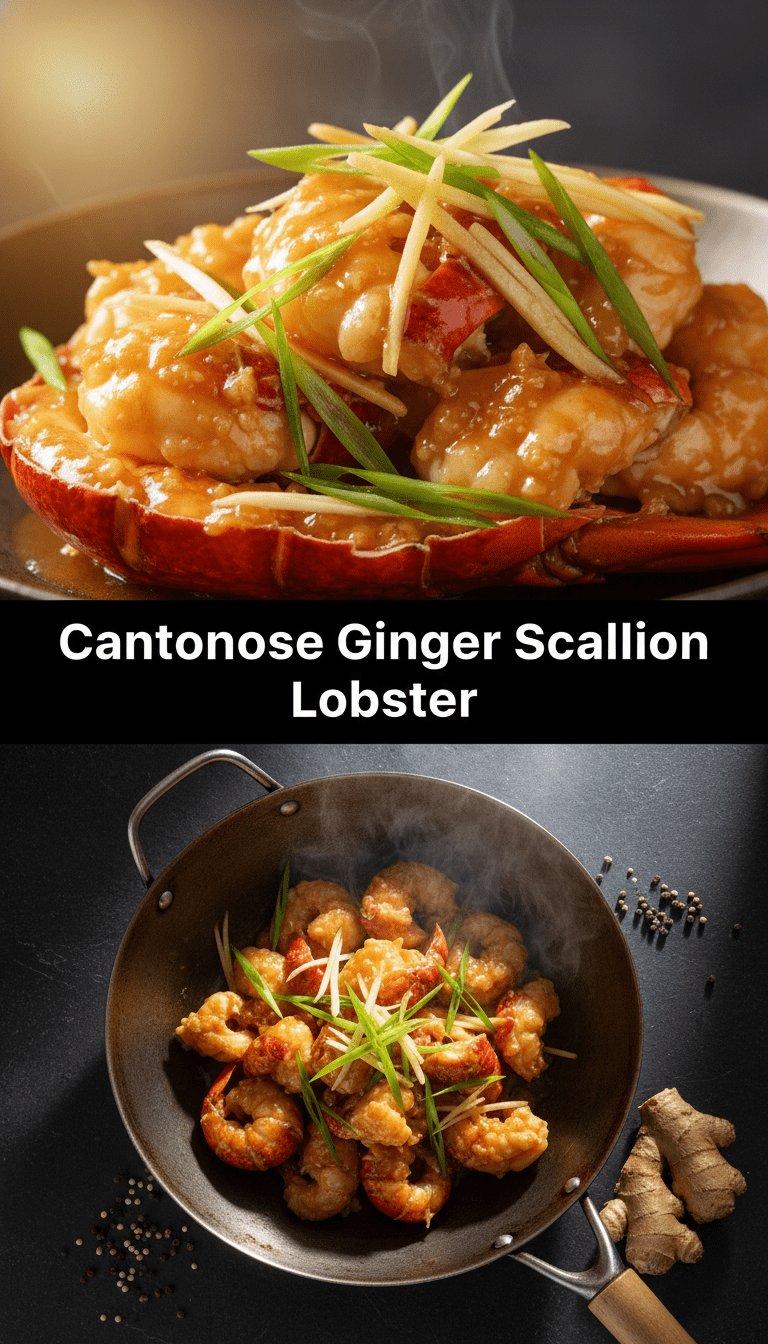
Hello, food lovers! Welcome back to my kitchen. Today, we are tackling a dish that sounds incredibly fancy but is surprisingly straightforward to make: Cantonese Ginger Scallion Lobster. This dish is a classic for a reason—the sweet, tender lobster meat perfectly complements the pungent, aromatic punch of fresh ginger and scallions. Trust me, once you try this, you’ll be ditching the takeout menus!
This recipe focuses on letting the freshness of the lobster shine. It’s quick, flavorful, and guaranteed to impress your dinner guests (or just yourself—no judgment here!).
Quick Facts
Prep time: 20 minutes
Cooking time: 10-15 minutes
Total time: Approximately 35 minutes
Serving size: 2 generous portions
Why You’ll Love This Recipe
If you’ve ever been intimidated by cooking whole seafood, this recipe is your friendly guide!
- Incredibly Flavorful: The sizzling hot oil poured over the ginger and scallions releases aromas that are simply intoxicating.
- Fast Dinner Hero: From start to finish, you can have this stunning meal on the table in under an hour.
- Celebration Worthy: It tastes like a million bucks without requiring complex techniques. It’s perfect for birthdays, anniversaries, or just a Tuesday night treat!
Ingredients You’ll Need
To create this masterpiece, gather these components. Quality ingredients really make the difference here!
For the Lobster:
- 2 live lobsters (about 1 to 1.5 lbs each), freshly killed and cleaned (ask your fishmonger to do this!)
- 1 teaspoon fine sea salt
- 1/2 teaspoon white pepper
- 1 tablespoon Shaoxing cooking wine (or dry sherry)
- 1 tablespoon cornstarch
For the Aromatics and Sauce:
- 1 cup thinly sliced white parts of scallions (about 4-5 stalks)
- 1 cup thinly sliced green parts of scallions (about 4-5 stalks)
- 1 cup thinly sliced fresh ginger (julienned)
- 1/2 cup neutral oil (like canola or vegetable oil)
- 1/4 cup water or lobster stock
- 2 tablespoons oyster sauce
- 1 tablespoon soy sauce (light or all-purpose)
- 1 teaspoon sesame oil
Step-by-Step Cooking Instructions
Let’s get cooking! Follow these steps carefully, and you’ll be enjoying succulent lobster in no time.
Step 1: Prep the Lobster
1. Have your fishmonger clean and chop the lobster into manageable pieces (claws, knuckles, and tail segments). Make sure the shell is intact; we want that beautiful presentation!
2. In a large bowl, gently toss the lobster pieces with the salt, white pepper, Shaoxing wine, and cornstarch until lightly coated. This seasoning step is crucial for flavor and texture.
Step 2: Steam the Lobster Pieces
1. Set up a large steamer basket over boiling water in a pot or wok.
2. Arrange the lobster pieces in the steamer, trying not to overcrowd them.
3. Cover and steam the lobster for about 6 to 8 minutes, or until the meat is opaque and just cooked through. Steaming ensures tenderness before the final sizzle.
4. Carefully remove the lobster pieces and set them aside on a large serving platter. Discard any liquid left in the steamer.
Step 3: Create the Ginger-Scallion Infusion
1. Wipe your wok or large skillet clean and heat it over medium-high heat.
2. Add the neutral oil and let it get hot—it should shimmer slightly.
3. Add the julienned ginger and the white parts of the scallions. Stir-fry quickly, about 1 minute, until fragrant but not browned. We want them soft and aromatic, not crispy!
4. Remove about two-thirds of this ginger-scallion mixture from the wok and sprinkle it evenly over the steamed lobster on your serving platter. This is the first layer of flavor!
Step 4: Make the Finishing Sauce
1. Keep the remaining ginger and scallion mixture in the wok.
2. Pour in the water (or stock), oyster sauce, soy sauce, and sesame oil. Bring the sauce to a simmer, stirring well to combine everything. Let it bubble gently for about 30 seconds to thicken slightly.
Step 5: The Grand Finale
1. Pour this hot sauce evenly over the lobster pieces on the serving platter, making sure to coat all the meat.
2. Take the green parts of the scallions and the reserved cooked ginger-scallion mixture from Step 3 and sprinkle them liberally over the top for color and a fresh bite.
3. The Sizzle: Heat the 1/2 cup of neutral oil again in the wok until it is smoking hot.
4. Carefully pour this intensely hot oil directly over the top layer of the green scallions and ginger on the platter. You should hear a magnificent sizzle—this releases all the final aromas!
Serve immediately!
Serving Suggestions
This rich dish needs something simple to soak up those gorgeous juices.
- Steamed White Rice: Absolutely essential. The sauce is perfect spooned over hot rice.
- Blanched Greens: Serve alongside blanched Chinese broccoli (gai lan) dressed simply with a touch of soy sauce.
- Clear Soup: A light egg drop soup complements the richness beautifully.
Tips for Customization and Variations
- Spice It Up: Add 1-2 dried chilies or a pinch of white pepper flakes when frying the ginger and white scallions for a subtle kick.
- Baking Instead of Steaming: If you prefer less moisture, you can lightly coat the lobster pieces with the seasoning, place them on foil, and bake at 400°F (200°C) for 10-12 minutes before proceeding to the sauce step.
- Shellfish Swap: This method works wonderfully with large prawns or crab as well! Adjust the steaming time according to the size of your chosen seafood.
Estimated Nutritional Information (Per Serving)
Please note: This is a very rough estimate and will vary significantly based on lobster size and oil absorption.
Calories: 650-750 kcal
Protein: 50g
Fat: 45g
Carbohydrates: 10g
Frequently Asked Questions (FAQs)
Q1: Can I use frozen lobster tails instead of a whole, fresh lobster?
A: Yes, you absolutely can! Thaw them completely first. Since tails cook faster than whole lobsters, reduce the steaming time to about 4-5 minutes.
Q2: What if I don’t have Shaoxing wine?
A: Dry sherry is the best substitute. If you cannot use alcohol, you can substitute it with an equal amount of chicken broth mixed with 1/4 teaspoon of white wine vinegar to mimic the slight acidity.
Q3: How do I know when the lobster is perfectly cooked?
A: The meat should be opaque white throughout. If you see any gray or translucent areas, it needs a little more time. Overcooked lobster becomes rubbery, so watch it closely!
Q4: Why the extreme heat for the final oil pour?
A: The final, smoking hot oil pour is key in Cantonese cooking! It flash-cooks the fresh green scallions and releases their essential oils and perfume, giving the dish that signature, vibrant aroma that makes it taste so authentic. Enjoy your culinary adventure!
