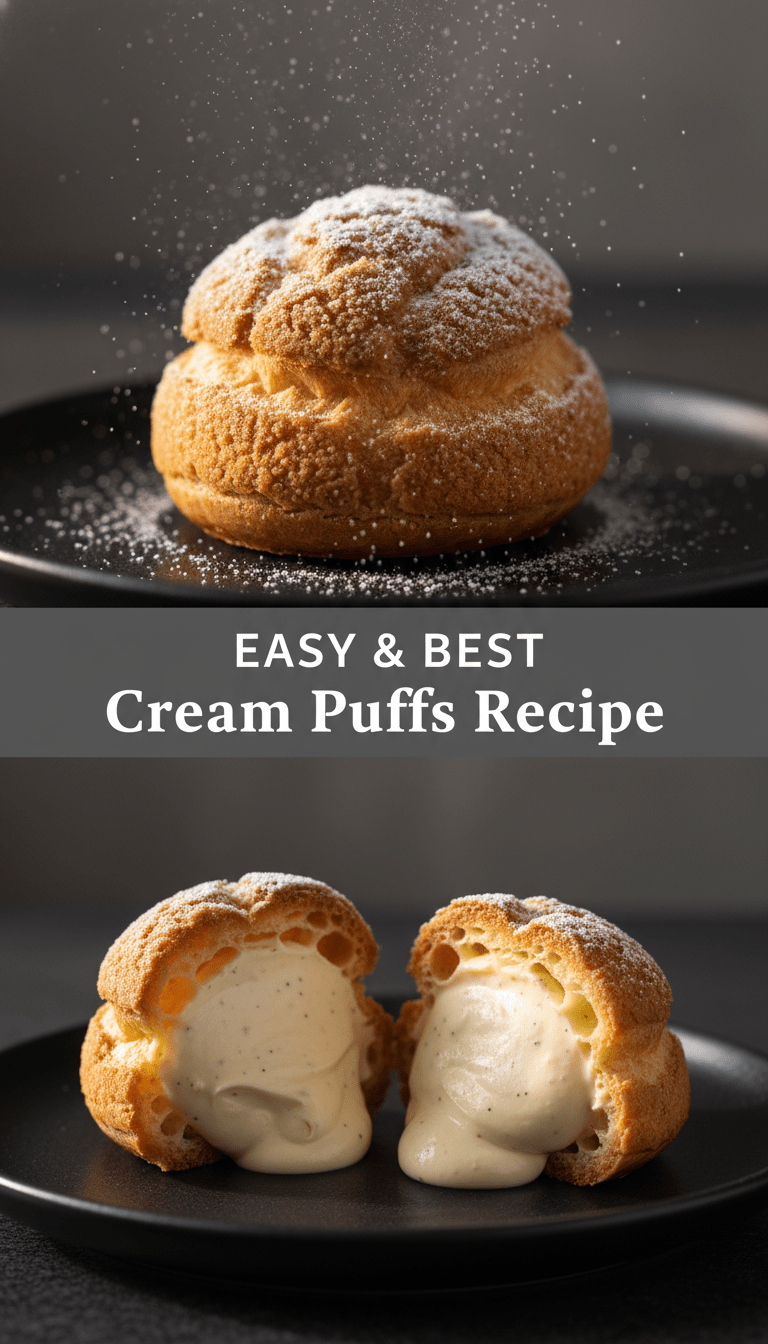
Hello, fellow baking enthusiasts! Are you ready to tackle a dessert that looks incredibly fancy but is surprisingly straightforward to make? Today, we’re diving into the magical world of pâte à choux to create the most divine, airy, and utterly irresistible Cream Puffs. Seriously, once you master these, you’ll be the star of every gathering!
Let’s get baking!
Quick Facts
Here’s a snapshot of what you’re looking at:
Prep time: 25 minutes
Cooking time: 30-35 minutes
Total time: Approximately 1 hour (plus cooling/filling time)
Serving size: Makes about 18 medium puffs
Why You’ll Love This Recipe
These aren’t your average store-bought puffs. This recipe delivers:
- Incredible Texture: Light, hollow, and beautifully crisp shells that make the perfect vessel.
- Simple Foundation: Once you nail the basic choux pastry, you can make eclairs, profiteroles, or even savory gougères!
- Ultimate Customization: They are fantastic filled with classic whipped cream, pastry cream, or even ice cream.
- The Wow Factor: They look impressive, making any afternoon snack feel like a special occasion.
Ingredients You’ll Need
We are making two main components: the Choux Pastry Shells and the simple Whipped Cream Filling.
For the Pâte à Choux Shells
- 1 cup Water
- ½ cup Unsalted Butter (cut into small pieces)
- ¼ teaspoon Salt
- 1 tablespoon Granulated Sugar
- 1 cup All-Purpose Flour (spooned and leveled)
- 4 Large Eggs (at room temperature is best!)
For the Classic Filling
- 1 ½ cups Heavy Whipping Cream (very cold)
- ¼ cup Powdered Sugar (or to taste)
- 1 teaspoon Vanilla Extract
Step-by-Step Instructions
This process has three key stages: making the dough, baking the puffs, and filling them. Don’t rush the oven stage—that’s where the magic happens!
Part 1: Mastering the Choux Pastry
1. Preheat & Prep: Preheat your oven to 400°F (200°C). Line two large baking sheets with parchment paper.
2. Boil the Base: In a medium, heavy-bottomed saucepan, combine the water, butter, salt, and sugar. Heat over medium heat until the butter is completely melted and the mixture comes to a rolling boil (where bubbles vigorously break the surface).
3. Add the Flour: Immediately remove the saucepan from the heat. Dump all the flour in at once. Stir vigorously and quickly with a wooden spoon until the mixture forms a smooth ball that pulls away cleanly from the sides of the pan.
4. Cook the Dough (Panada): Return the pan to medium-low heat. Continue stirring and “cooking” the dough ball for about 1 to 2 minutes. This is crucial for evaporating excess moisture. You’ll know it’s ready when a slight film forms on the bottom of the pan.
5. Cool Slightly: Transfer the dough ball to a large mixing bowl (or stand mixer bowl). Let it cool for 5 minutes to prevent scrambling the eggs.
Part 2: Incorporating the Eggs
1. Beat in Eggs: Add the eggs one at a time, beating well after each addition until the egg is fully incorporated before adding the next.
2. The Consistency Test: After the fourth egg, the dough will look wet and glossy, but when you lift your spoon, the dough should slowly fall off in a thick “V” shape. It should look like thick, shiny mashed potatoes. If it seems too stiff, you can beat in half of a fifth egg if needed, but be cautious! Do not overbeat.
Part 3: Baking for Maximum Puff
1. Pipe or Drop: Transfer the dough to a piping bag fitted with a large round tip (or just use two spoons). On the prepared baking sheets, drop rounded tablespoonfuls of dough, spaced about 2 inches apart. Tip: If using a piping bag, dip your finger in water to gently smooth any peaks.
2. The Bake Strategy: Place the trays in the 400°F (200°C) oven. Bake for 15 minutes.
3. Lower the Heat: Do not open the oven door! After 15 minutes, reduce the temperature to 350°F (175°C) and bake for another 15-20 minutes, or until the puffs are golden brown, look dry, and feel light. They should sound hollow when tapped.
4. Dry Them Out: Turn off the oven. Poke a small slit in the side of each puff to allow steam to escape. Leave the puffs inside the cooling oven with the door ajar for 10 minutes. This prevents them from collapsing. Cool completely on a wire rack.
Part 4: Whipped Cream Filling
1. In a clean, cold bowl, whip the heavy cream, powdered sugar, and vanilla extract until stiff peaks form.
Serving Suggestions
Once the shells are completely cool, simply slice the puffs horizontally (like a little sandwich) or poke a small hole in the bottom. Pipe or spoon the whipped cream generously into the center.
Dust immediately with powdered sugar before serving!
Tips for Customization & Variations
- Chocolate Cream Puffs: Add 2 tablespoons of unsweetened cocoa powder to the flour mixture before cooking in the pan, and fill with chocolate whipped cream or chocolate pastry cream.
- Flavor Boosted Cream: Add a teaspoon of lemon zest, coffee extract, or a liqueur (like Grand Marnier) to your whipped cream.
- Savory Option (Gougères): Skip the sugar in the dough, add ½ cup of grated Gruyère or sharp cheddar cheese when you add the flour, and omit the filling. Bake as directed for amazing cheese puffs!
- Glaze Them: Drizzle the tops with melted dark chocolate or a simple vanilla glaze (powdered sugar mixed with milk).
Nutritional Information (Estimated Per Puff, Unfilled)
Please note: This is a rough estimate and will vary based on exact ingredient amounts and sizes.
Calories: 120-150
Fat: 7g
Carbohydrates: 13g
Protein: 3g
Frequently Asked Questions (FAQs)
Q: Why did my cream puffs deflate after coming out of the oven?
A: This almost always means they were pulled out too soon! The inside structure wasn’t fully set. The crucial step is leaving them in the turned-off oven with the door slightly open for that final drying period.
Q: Can I make the shells ahead of time?
A: Yes! Once completely cooled, store the empty shells in an airtight container at room temperature for up to 2 days, or freeze them for up to a month. If frozen, thaw them on the counter before filling. Never fill them ahead of time, or they will become soggy!
Q: How do I know if the dough consistency is right before adding the eggs?
A: After cooking the flour mixture, it should look like a cohesive ball, and when you press it with a spoon, it should leave a thin coating on the bottom of the pan. If it looks crumbly, it’s too dry.
Enjoy the process, friends! Making cream puffs is truly rewarding, and I promise you, the taste of a freshly made, light-as-air cream puff is unbeatable! Happy baking!
