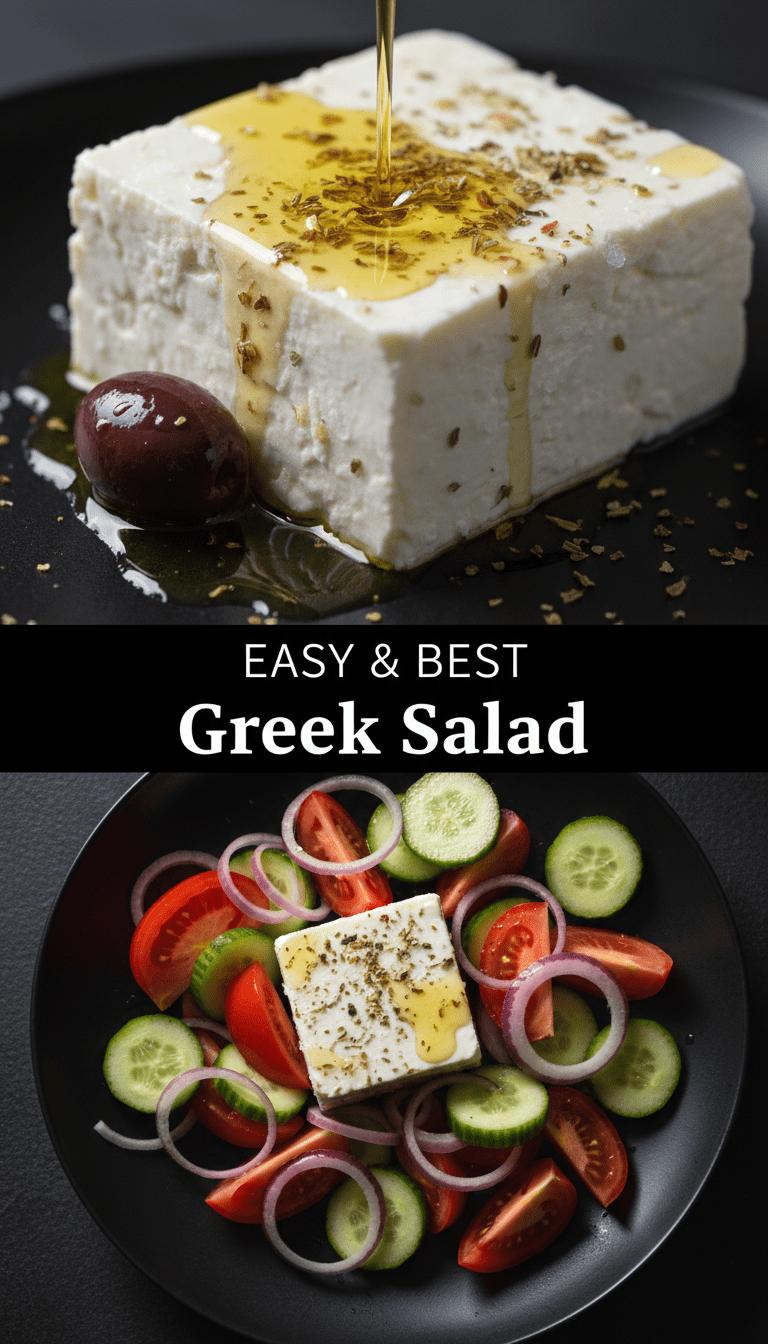
Hey everyone, and welcome back to my kitchen! If there’s one dish that screams summer, sunshine, and authentic Mediterranean vibes, it has to be the classic Greek Salad, or Horiatiki. Forget those sad, soggy salads you sometimes find at picnics. Today, I’m sharing my go-to recipe for a vibrant, crunchy, and utterly delicious Greek Salad that relies on the absolute best, freshest ingredients. It’s so easy, you won’t even need to turn on the stove!
Quick Facts
Here’s what you need to know before you dive in:
Prep time: 15 minutes
Cooking time: 0 minutes
Total time: 15 minutes
Serving size: 4 generous servings
Why You’ll Love This Recipe
Honestly, what’s not to love?
- Simplicity at its Best: This recipe is mostly assembly! No complicated cooking techniques required.
- Bursting with Flavor: The combination of tangy feta, juicy tomatoes, sharp red onion, and a zesty oregano dressing is pure magic.
- Healthy and Refreshing: It’s packed with fresh vegetables, healthy olive oil, and satisfying cheese. Perfect for a light lunch or a stunning side dish!
Ingredients You’ll Need
The key to a great Greek Salad is using high-quality ingredients. Don’t skimp on the olive oil or the feta!
For the Salad:
- 4 large ripe tomatoes, cut into rough wedges
- 1 large English cucumber, peeled (or partially peeled) and sliced into thick half-moons
- 1 green bell pepper, deseeded and sliced into thin strips
- 1/2 large red onion, thinly sliced
- 1 cup Kalamata olives, pitted or unpitted (your preference!)
- 8 oz block of good quality Feta cheese (the brine-packed kind is the best!), cut into large cubes or crumbled
For the Simple Dressing:
- 1/3 cup extra virgin olive oil (seriously, use the good stuff!)
- 2 tablespoons red wine vinegar
- 1 teaspoon dried Greek oregano (this is crucial!)
- A pinch of sea salt and freshly ground black pepper, to taste
Step-by-Step Assembly Magic
This salad comes together in a flash. Follow these simple steps for perfection!
Step 1: Prep Your Veggies
Start by washing and chopping all your vegetables as directed above. I like to keep the cuts chunky for a rustic, authentic feel—that’s how they make it in Greece! Place the tomatoes, cucumber, bell pepper, and red onion into a large, beautiful serving bowl.
Step 2: Add the Olives
Scatter the Kalamata olives over the vegetables. If you’re using olives packed in brine, give them a quick rinse before adding them in; this prevents the whole salad from becoming too salty.
Step 3: Whisk the Dressing
In a small jar or bowl, combine the olive oil, red wine vinegar, dried oregano, salt, and pepper. Whisk vigorously until the dressing emulsifies slightly (it will look slightly milky). Taste it! Does it need more tang? Add a drop more vinegar.
Step 4: Dress and Toss Gently
Pour about two-thirds of the dressing over the vegetables. Use large salad servers to gently toss everything together just enough to coat the vegetables lightly. We don’t want to bruise them!
Step 5: The Feta Finale
This is the most important step for an authentic look. Arrange the large cubes or crumbles of feta cheese right on top of the salad. Do not toss the feta in with the salad; it should sit proudly on top. Drizzle the remaining dressing lightly over the feta cheese.
Serving Suggestions
This salad is incredibly versatile!
1. As a Main Course: Serve with thick slices of crusty bread (like sourdough or a baguette) for soaking up all the delicious juices at the bottom of the bowl.
2. Perfect Side: It pairs wonderfully with grilled chicken souvlaki, lamb chops, or simple lemon-roasted potatoes.
3. Mezze Platter: Include it as the centerpiece of a larger platter featuring hummus, tzatziki, and pita bread.
Tips for Customization and Variations
While the traditional Horiatiki skips lettuce, feel free to experiment!
- Add Greens: If you must have greens, use a small handful of crisp Romaine or a peppery arugula mixed in before dressing.
- Spice it Up: A tiny pinch of red pepper flakes in the dressing gives it a nice little kick.
- Add Capers: For an extra punch of salty brine, toss in a tablespoon of capers along with the olives.
- Mint Magic: Stir in a tablespoon of finely chopped fresh mint leaves along with the oregano for an unexpectedly bright flavor.
Estimated Nutritional Information (Per Serving)
Please remember this is an estimate and will vary based on your specific ingredients, especially the amount of feta and olive oil used.
Calories: Approximately 350-400 kcal
Fat: High, primarily from healthy monounsaturated fats in olive oil and feta.
Protein: Good source, mainly from the feta cheese.
Fiber: Good source from the fresh vegetables.
Frequently Asked Questions (FAQs)
Q1: Can I use pre-crumbled feta?
While you can, I strongly advise against it if you want the best flavor. Pre-crumbled feta is often drier and coated in anti-caking agents. A block of feta stored in brine is creamier, saltier, and tastes much more authentic once dressed.
Q2: Should I add lettuce? Isn’t this technically a “Greek Salad” if I add lettuce?
In Greece, a true Horiatiki (meaning “village” salad) never contains lettuce. If you add lettuce, you are essentially making an Americanized “Greek Salad.” If you love lettuce, go for it, but for the authentic experience, stick to the core ingredients listed above!
Q3: How long will this salad keep in the fridge?
Because tomatoes release a lot of water once salted and dressed, this salad is definitely best eaten the day it is made. If you must prep ahead, chop the vegetables and store them separately from the dressing and feta. Assemble just before serving!
Enjoy this bright, flavorful salad, friends. Let me know in the comments how yours turned out! Yia sas (Cheers)!
