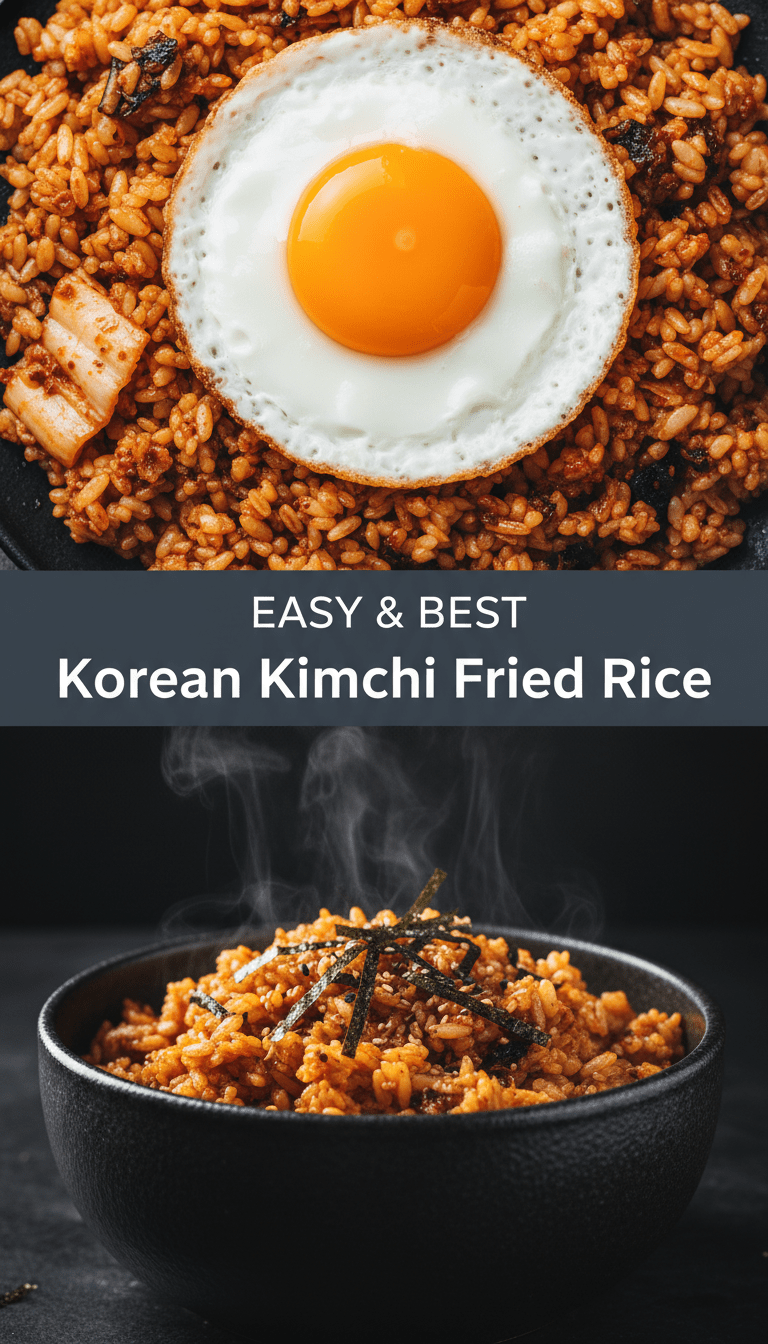
Hey food lovers! Welcome back to my kitchen. Today, we are diving headfirst into a dish that is pure joy in a bowl: Kimchi Bokkeumbap, or Korean Kimchi Fried Rice! If you’ve ever had perfectly aged kimchi sitting in your fridge and wondered what magic you could make with it, this is your answer. It’s quick, it’s flavorful, and it tastes like a warm hug from Seoul. Seriously, this recipe is so easy, it’s almost criminal. Let’s get cooking!
Quick Facts
Prep time: 10 minutes
Cooking time: 15 minutes
Total time: 25 minutes
Serving size: 2 generous servings
Why You’ll Love This Recipe
This isn’t just any fried rice. What makes Korean Kimchi Fried Rice truly special is that gorgeous, tangy, slightly spicy kick from the fermented kimchi. It cuts through the richness of the sesame oil and pork belly (or bacon) beautifully. Plus, it’s the ultimate fridge-cleanout meal—perfect for using up leftover rice. It comes together faster than ordering takeout, and the final touch of a runny fried egg? Perfection!
Ingredients You’ll Need
To make this deliciousness, gather these simple items:
- 2 cups cooked, day-old white rice (cold rice works best!)
- 1 cup aged kimchi, chopped (reserve 2 tablespoons of the kimchi juice!)
- 4 oz fatty pork belly or bacon, chopped (optional, substitute with spam or omit for vegetarian)
- 1/2 medium yellow onion, diced
- 1 clove garlic, minced
- 1 tablespoon soy sauce
- 1 teaspoon gochugaru (Korean chili flakes, optional for extra heat)
- 1 teaspoon sesame oil
- 1 tablespoon neutral cooking oil (like canola or vegetable)
- 1 teaspoon sugar (to balance the sourness of the kimchi)
- For Garnish (Essential!): 2 large eggs, toasted seaweed (gim), and sesame seeds.
Let’s Get Frying! Step-by-Step Instructions
This recipe cooks fast, so have all your ingredients prepped and ready to go before you turn on the heat!
Step 1: Sauté the Meat and Aromatics
Heat the neutral cooking oil in a large skillet or wok over medium-high heat. Add your chopped pork belly or bacon. Cook until the fat has rendered and the meat is crispy—about 4 to 5 minutes. Scoop out most of the rendered fat, leaving about 1 tablespoon behind for flavor. Add the diced onion and sauté until softened, about 2 minutes. Toss in the minced garlic and cook for 30 seconds until fragrant.
Step 2: Introduce the Kimchi Magic
Add the chopped kimchi to the skillet. Sauté it vigorously with the onions and meat for about 3 to 4 minutes. This step is crucial—cooking the kimchi slightly mellows its raw tanginess and deepens its flavor.
Step 3: Rice and Seasoning Time
Push the mixture to one side of the pan. Add the cold rice to the empty space in the pan. Drizzle the soy sauce over the rice and sprinkle the gochugaru (if using) and sugar over everything. Use your spatula to break up any clumps of rice. Stir everything together until the rice is evenly coated in the reddish juices.
Step 4: The Flavor Bomb Boost
Pour in the reserved kimchi juice and stir well. Keep frying for another 2 to 3 minutes, pressing the rice down occasionally to help it toast slightly. Turn off the heat and drizzle the sesame oil over the top, tossing one last time.
Step 5: The Egg Topping Finale
While the rice rests, quickly fry two eggs in a separate pan sunny-side up—we want that runny yolk!
Serving Suggestions: Make It Gorgeous!
Serve the kimchi fried rice immediately in bowls. Top each serving with one perfectly cooked sunny-side-up egg. Sprinkle generously with torn pieces of toasted seaweed (gim) and a final dusting of sesame seeds. That yolk mixing into the spicy rice? Unbeatable!
Tips for Customization and Variations
- Go Veggie: Skip the meat entirely. Use a tablespoon of good quality sesame oil when sautéing the onions to compensate for the missing fat, or add sautéed mushrooms for texture.
- Protein Power: Add cooked spam (classic!), bulgogi leftovers, or cubed tofu along with the onions.
- Cheese Pull: For a truly decadent version (often seen in Korean restaurants!), sprinkle mozzarella cheese over the hot rice right before serving and cover the pan briefly until it melts.
- Spice Level: If you like it hot, add a teaspoon of gochujang (Korean chili paste) along with the soy sauce.
Estimated Nutritional Information (Per Serving, without optional additions)
Note: This is an estimation and will vary based on oil and pork usage.
Calories: Approximately 450-550 kcal
Protein: 18g
Fat: 20g
Carbohydrates: 60g
Frequently Asked Questions (FAQs) About Kimchi Fried Rice
Q1: Can I use fresh kimchi?
A1: You really shouldn’t. Kimchi fried rice is best made with aged or sour kimchi. The fermentation process gives it the necessary deep, complex sour flavor that balances the richness of the dish. Fresh kimchi will taste too sharp and watery.
Q2: Why must I use cold, day-old rice?
A2: Cold rice is drier than freshly cooked rice. Using dry rice prevents the fried rice from becoming mushy or sticky. It allows the individual grains to heat up and fry properly, giving you that desirable slightly crispy texture.
Q3: What if I don’t have pork belly?
A3: Bacon is a fantastic, easy substitute. Spam is also very traditional and adds a salty punch. If you are vegetarian, you can skip the meat entirely, or substitute with crumbled firm tofu sautéed until browned.
Q4: Can I make this ahead of time?
A4: You can prepare the entire fried rice mixture (without the egg) and store it in the fridge for up to 3 days. Reheat it in a hot pan, adding a tiny splash of water if it seems dry, and then top it with a freshly fried egg!
