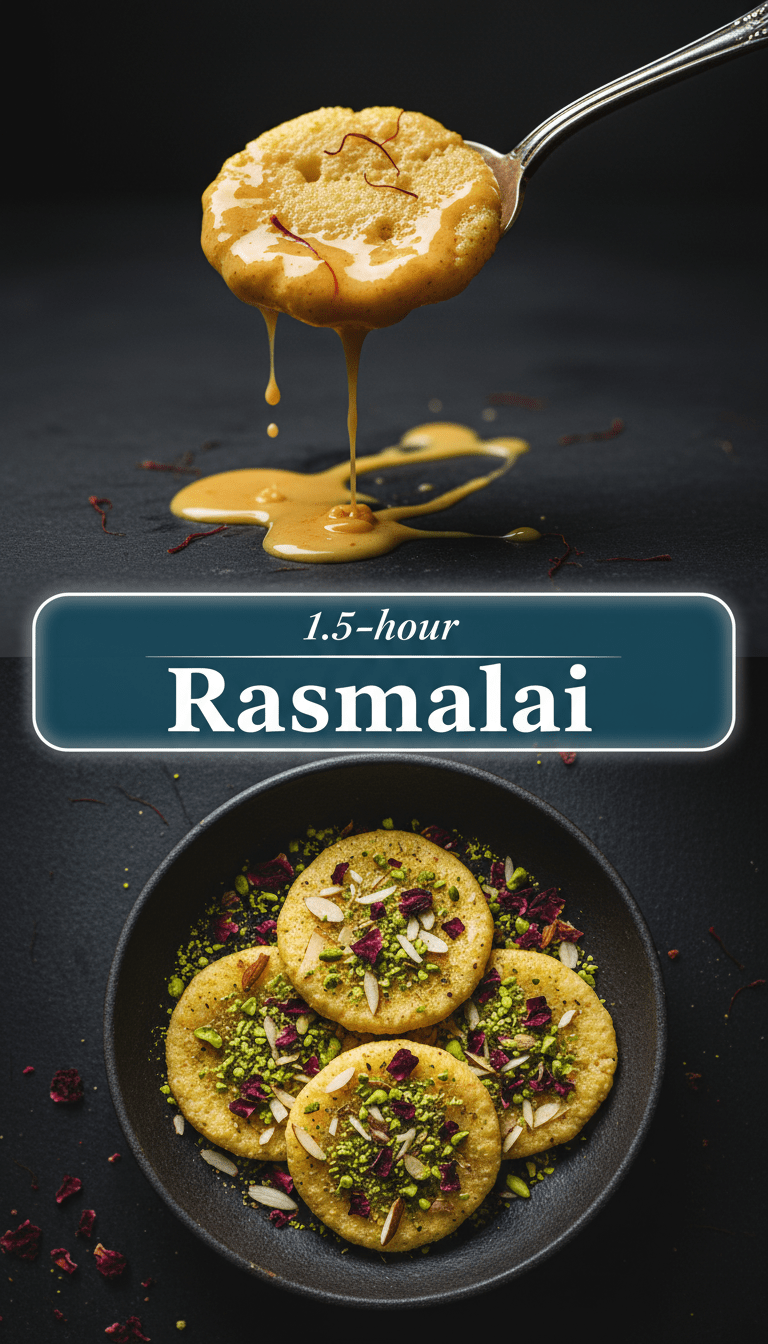
Hey everyone, and welcome back to the kitchen! Today, we are diving deep into one of the most luxurious, melt-in-your-mouth Indian sweets you will ever taste: Rasmalai. Forget those overly sweet, spongy versions you might have tried elsewhere. This recipe focuses on creating soft, pillowy cheese patties soaked in saffron-infused, lightly sweetened, thickened milk. It’s pure comfort food disguised as an elegant dessert. Trust me, once you make this from scratch, you’ll never go back!
Quick Facts
Here’s a snapshot so you know exactly what you’re signing up for:
Prep time: 30 minutes
Cooking time: 45 minutes
Total time: 1 hour 15 minutes (plus chilling time)
Serving size: 6-8 people
Why You’ll Love This Recipe
This isn’t just another dessert recipe; this is the Rasmalai recipe you need.
- Ultimate Softness: We’re perfecting the technique for patties that don’t break or turn rubbery. They literally dissolve on your tongue!
- Balanced Flavor: The sweetness is just right—creamy, delicate, and beautifully perfumed with saffron and cardamom.
- Impressive Results: It looks incredibly professional, but the steps are surprisingly straightforward when broken down.
Gathering Your Goodies: Ingredients List
We’ll need ingredients for two main components: the cheese patties (Chhena) and the flavorful milk (Rabri).
For the Cheese Patties (Chhena)
- 1 whole gallon (about 3.8 liters) whole milk (full-fat recommended)
- 2-3 tablespoons lemon juice or white vinegar (for curdling)
- 1 teaspoon cornstarch (this is our secret weapon for binding!)
- 1/2 teaspoon all-purpose flour (optional, for extra binding)
For the Saffron Milk (Rabri)
- 3 cups whole milk (again, use full-fat for the best texture)
- 1/2 cup sugar (adjust to your preference)
- A generous pinch of saffron strands
- 1/2 teaspoon ground cardamom powder
- 1 tablespoon finely chopped pistachios and almonds, for garnish
Step-by-Step Magic: Making the Dreamy Rasmalai
This process has a few distinct stages, but take it slow, and you’ll do great!
Phase 1: Making the Fresh Cheese (Chhena)
1. Curdle the Milk: Pour the gallon of milk into a heavy-bottomed pot and bring it to a rolling boil over medium-high heat, stirring occasionally so it doesn’t scorch.
2. Separate the Curds: Once boiling, reduce the heat to low. Add the lemon juice or vinegar, one tablespoon at a time, stirring gently until the milk completely separates into solid white curds (paneer/chhena) and greenish-yellow whey. If it doesn’t separate after 3 additions, add a tiny bit more acid.
3. Strain and Rinse: Line a colander with two layers of cheesecloth (muslin cloth). Gently pour the curds into the cloth-lined colander. Immediately rinse the curds under cold running water for about a minute. This step is crucial—it stops the cooking process and removes any sour taste from the lemon juice.
4. Squeeze Gently: Gather the corners of the cheesecloth and gently squeeze out the excess water. You want the chhena to be moist, not bone dry. Let it hang or sit in the colander for about 15-20 minutes to drain further.
Phase 2: Shaping the Patties
1. Knead the Dough: Empty the moist chhena onto a clean plate or a large mixing bowl. Add the cornstarch and optional flour. Now, you need to knead it! Rub the chhena between the heel of your palm against the surface, just like kneading bread dough, for about 5 to 7 minutes until it forms a very smooth, soft, non-grainy dough. If it cracks while kneading, it’s too dry—add a teaspoon of water.
2. Form the Discs: Divide the dough into 10-12 equal portions. Roll each portion into a smooth ball, then gently flatten it into a disc about 1/4 inch thick. Be gentle; they are delicate!
Phase 3: Cooking the Patties
1. Prepare the Cooking Water: In a wide, shallow pan, bring about 4 cups of water and 1 teaspoon of sugar to a vigorous boil. The sugar helps prevent the patties from sticking and stiffening.
2. Poach Them: Carefully drop the chhena discs into the rapidly boiling water, making sure not to overcrowd the pan (cook in batches if necessary). Cover the pan partially and let them boil for 7-10 minutes. They will swell up to almost double their size!
3. Chill the Cooked Patties: Using a slotted spoon, carefully transfer the puffed-up patties into a bowl of ice-cold water. Let them sit there for 5 minutes. This stops the cooking and keeps them wonderfully spongy. Drain them well afterward.
Phase 4: Simmering in Sweet Milk (The Rabri)
1. Thicken the Milk: In a clean, heavy-bottomed pan, combine the 3 cups of milk, sugar, saffron strands, and cardamom powder. Bring this mixture to a gentle boil over medium heat.
2. Reduce and Infuse: Once boiling, reduce the heat to low and let it simmer, stirring frequently. We want the milk to reduce by about one-third and become slightly thicker and creamy. This takes about 20-25 minutes. Taste it—it should be subtly sweet.
3. Soak: Gently slide the drained, cooked chhena discs into the warm saffron milk.
4. The Final Soak: Simmer everything together on the lowest heat for just 3-5 minutes so the patties absorb the flavor. Turn off the heat, sprinkle with chopped nuts, and let it cool down completely at room temperature.
Serving Suggestions
Rasmalai is truly best served chilled! After it cools to room temperature, cover it and refrigerate for at least 3 hours (overnight is even better) to allow the discs to fully soak up that gorgeous, aromatic milk. Serve in shallow bowls garnished with extra slivered pistachios and maybe a tiny sprinkle of extra saffron threads.
Tips for Customization & Variations
- Go Richer: For an unbelievably decadent version, stir in 1/4 cup of condensed milk along with the regular sugar during Phase 4.
- Nut-Free: If you have nut allergies, feel free to omit the garnishes or substitute with edible dried rose petals for a beautiful look.
- The Vinegar Trick: If you don’t have lemon juice or vinegar, you can use citric acid powder dissolved in water as your coagulant.
Nutritional Information (Estimated per serving)
Please remember these are rough estimates for a standard serving size:
Calories: 250-300 kcal
Protein: 10-12g
Fat: 14-18g
Carbohydrates: 25-30g
Frequently Asked Questions (FAQs)
Q1: Why are my Rasmalai patties breaking?
A: This usually happens for two reasons: either you didn’t knead the chhena enough, so it wasn’t smooth, or you added too much flour/starch. They need a very good, smooth knead until soft, but adding too many binding agents makes them dense and prone to cracking when boiled.
Q2: Can I use store-bought paneer instead of making fresh chhena?
A: While you can, the texture won’t be the same. Store-bought paneer is usually pressed and firm. To use it, you would need to crumble it very finely and then knead it with the cornstarch for a much longer time. Freshly curdled milk yields the lightest, fluffiest texture, which is the hallmark of good Rasmalai.
Q3: How long does Rasmalai last in the fridge?
A: Since it’s made from fresh milk and cheese, it’s best enjoyed within 3 to 4 days when stored properly in an airtight container in the refrigerator.
Happy cooking, friends! Let me know in the comments if you try this recipe!
