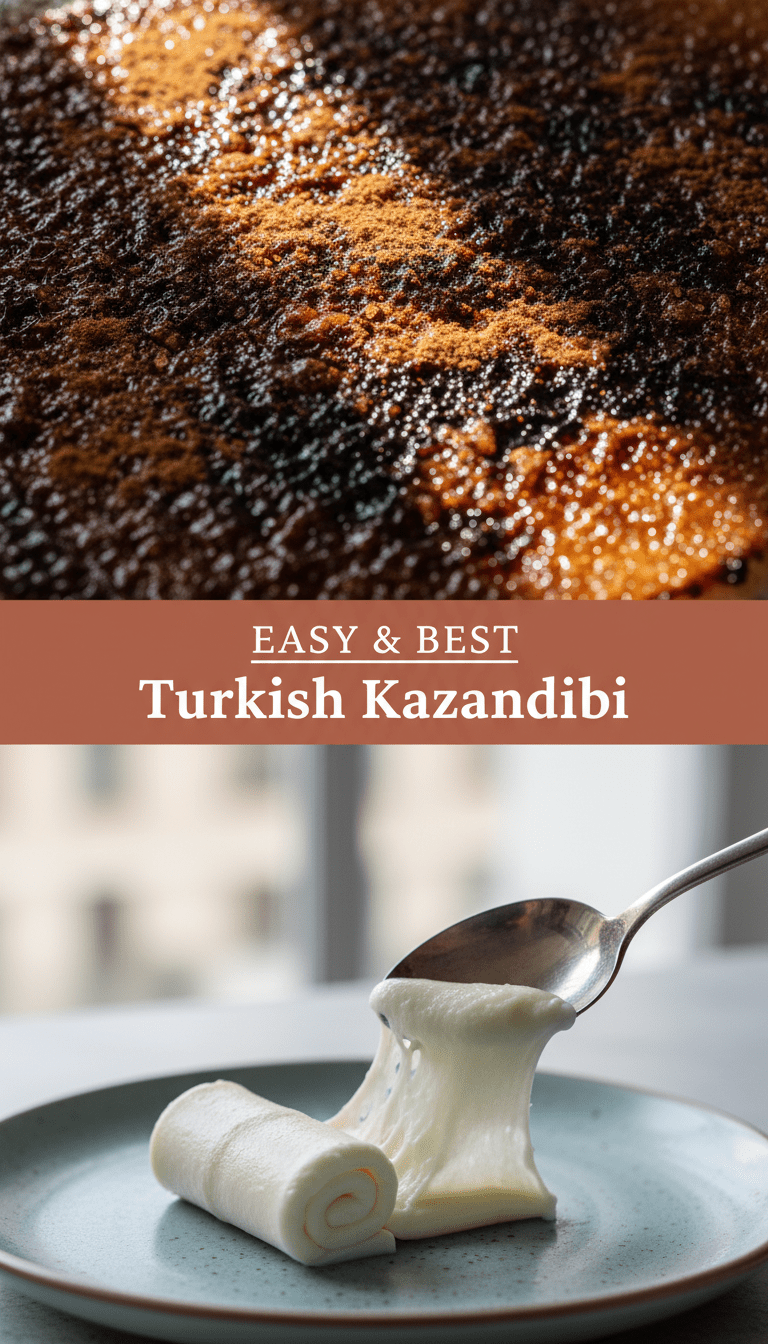
Hey there, food lovers! Welcome back to the kitchen. Today, we’re diving headfirst into a dessert that is pure, unadulterated Turkish magic. Forget everything you thought you knew about rice pudding, because we’re making Kazandibi!
Kazandibi literally translates to “bottom of the pot.” Why? Because this creamy milk pudding is intentionally, delightfully, and deliciously scorched on the bottom, creating a rich, dark caramel layer that is absolutely addictive. It’s soft, it’s smoky, it’s sweet—it’s everything you want in a comfort dessert, served slightly warm or chilled. Trust me, once you master this, you’ll be making it every weekend!
Quick Facts About Our Dreamy Kazandibi
This recipe is easier than you might think! Let’s get organized:
Prep time: 15 minutes
Cooking time: 45 minutes
Total time: 60 minutes (plus chilling time)
Serving size: 6 generous portions
Why You’ll Love This Recipe
I know what you’re thinking: “Burnt pudding? Is that right?” Yes! The charring process is what gives Kazandibi its signature, smoky depth that cuts through the sweetness of the milk pudding. It’s incredibly creamy, requires simple pantry staples, and the dramatic roll-out presentation always impresses guests. It’s a true taste of Istanbul right in your own kitchen!
What You’ll Need: The Ingredients List
We’re keeping this classic and focused on the flavor.
For the Pudding:
- 4 cups whole milk (the richer, the better!)
- 1/2 cup granulated sugar (adjust to your sweetness preference)
- 1/2 cup rice flour
- 1/4 cup cornstarch
- 1 teaspoon vanilla extract
- 1 teaspoon butter (optional, for glossiness)
For the Caramelization:
- 1 tablespoon unsalted butter
- 2 tablespoons granulated sugar (this is crucial for the dark crust!)
Step-by-Step Instructions: Creating the Magic Bottom
Follow these steps closely, especially the burning part—that’s where the fun begins!
Phase 1: Making the Silky Pudding Base
1. Mix the Dry Ingredients: In a medium saucepan (a heavy-bottomed one works best!), whisk together the sugar, rice flour, and cornstarch until there are absolutely no lumps.
2. Add the Milk: Gradually pour in the cold milk while continuously whisking. It’s essential to add the milk slowly to prevent lumps from forming later.
3. Cook Until Thick: Place the saucepan over medium heat. Stir constantly! This is non-negotiable, or it will stick and burn unevenly. Keep stirring until the mixture comes to a boil and thickens significantly—it should coat the back of a spoon thickly (about 10–15 minutes).
4. Finish the Base: Once thick, remove it from the heat. Stir in the vanilla extract and the optional teaspoon of butter until melted and incorporated.
Phase 2: The Kazandibi Transformation (The Secret Step!)
1. Prep the Pot: Take a heavy-bottomed, oven-safe baking dish or a wide, shallow stainless steel pan (this is traditional). Add the 1 tablespoon of butter and the 2 tablespoons of extra sugar directly into the bottom of the pan.
2. Caramelize the Bottom: Place the pan directly over medium-high heat on your stovetop. Let the butter melt and the sugar start to caramelize. Do not stir with a spoon! Instead, gently swirl the pan occasionally until the sugar has melted completely and turned a rich, deep amber or mahogany color. Be careful not to let it turn black, or it will taste bitter. This takes about 3–5 minutes.
3. Pour and Set: Immediately and carefully pour the hot milk pudding mixture evenly over the caramelized sugar layer in the pan. Don’t stir or disturb the bottom layer!
4. The Oven Finish: Place the pan under a preheated broiler on medium-high. Watch it like a hawk! Broil for about 5–8 minutes until the very top layer of the pudding starts to brown slightly.
Phase 3: The Signature Roll
1. Cool Down: Remove the pan from the oven and let it cool on the counter until it’s just warm enough to handle (about 30 minutes).
2. The Roll: This is the fun part! Using a spatula, gently loosen the edges of the pudding. Place a serving plate or cutting board upside down over the top of the pan. Holding the pan firmly with oven mitts, quickly and confidently flip the entire pan over.
3. Reveal the Treasure: Carefully lift the pan. The caramelized bottom is now the top! If you want the classic look, gently roll the entire pudding block onto a clean platter. You can cut it into squares or slices now, or wait until it’s fully chilled.
Serving Suggestions
Kazandibi is traditionally served at room temperature or slightly chilled. Dust the top generously with ground cinnamon before serving. For an extra layer of luxury, drizzle a tiny bit of honey over the top, or serve alongside a scoop of vanilla ice cream or kaymak (Turkish clotted cream).
Tips for Customization and Variations
- Flavor Infusion: Before cooking the milk, steep a cinnamon stick or a few cardamom pods in the milk while it heats up. Remove them before adding the dry ingredients.
- Color Control: If you are nervous about broiling, you can skip the broiler and just let the sugar caramelize very darkly on the stovetop, then pour the pudding over, cover, and let it set in the fridge. The crust won’t be as thick, but it will still be delicious.
- Nutty Crunch: Sprinkle chopped pistachios or walnuts over the top just before serving.
Estimated Nutritional Information (Per Serving)
Please note: This is a rough estimate as ingredients vary. Kazandibi is a rich, indulgent dessert.
Calories: Approximately 300-350
Fat: 8g
Carbohydrates: 55g
Protein: 7g
Frequently Asked Questions (FAQs) About Kazandibi
Q: Can I make this ahead of time?
A: Absolutely! Kazandibi tastes fantastic the next day. Let it cool completely, cover it tightly with plastic wrap (without touching the top), and refrigerate for up to 3 days.
Q: Why is my pudding lumpy?
A: You likely didn’t whisk the dry ingredients well enough before adding the cold milk, or you didn’t stir constantly while it cooked on the stovetop. Always use high heat initially for the dry mix before adding liquid.
Q: How dark should the caramel layer be?
A: It should be a deep, dark amber—almost the color of dark caramel sauce, but not black. Black means bitter! The darker the caramel, the deeper the signature smoky flavor will be.
Q: Do I have to flip it over?
A: Flipping it (or rolling it) is what gives you the beautiful contrast between the creamy white pudding and the dark, caramelized bottom. If you skip this step, you essentially have a lovely Sütlaç (Turkish rice pudding) base, but not true Kazandibi!
Happy baking, and enjoy this incredible piece of Turkish culinary history! Let me know in the comments how your caramelized bottom turned out!
