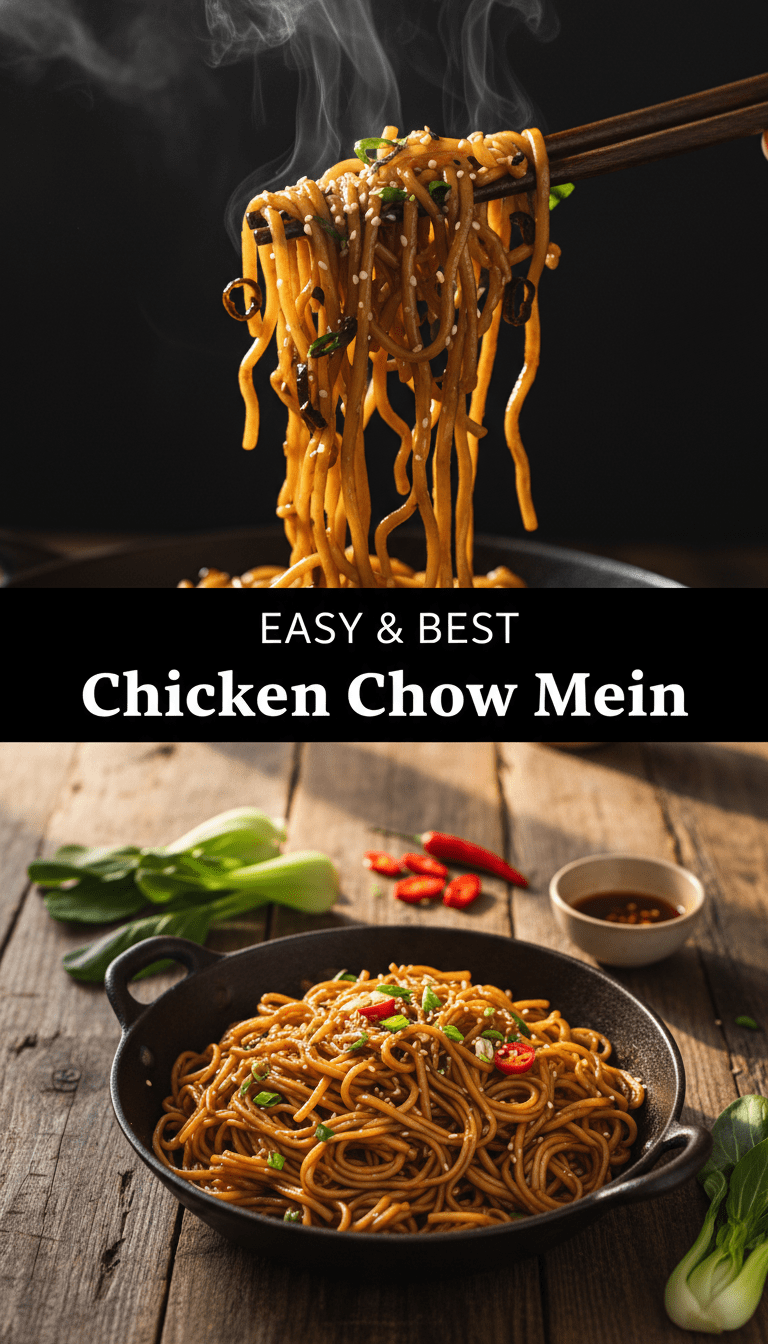
Hey food lovers! Welcome back to the kitchen. Today, we are tackling a dish that spells comfort, convenience, and pure deliciousness: Chicken Chow Mein. Forget those soggy takeout containers—we are making restaurant-quality noodles right in your own home! This recipe is incredibly easy, packed with fresh veggies, and coated in the most savory sauce. Get ready to impress everyone (especially yourself!).
Quick Facts
Here’s what you need to know before we dive in:
Prep time: 20 minutes
Cooking time: 15 minutes
Total time: 35 minutes
Serving size: 4 happy people
Why You’ll Love This Recipe
Why bother with delivery when you can whip up this amazing Chicken Chow Mein faster than the driver can find your house?
- Speedy Supper: Ready in under 40 minutes—perfect for busy weeknights.
- Flavor Explosion: That signature savory, slightly sweet, umami-rich sauce is addictive!
- Customizable Crunch: You control the veggie ratio, ensuring the perfect bite every time.
- Kid-Approved: Even picky eaters usually devour a good bowl of noodles.
Gather Your Goodies: The Ingredients List
We are dividing the ingredients into three main parts: the chicken marinade, the noodles, and the sauce.
For the Chicken & Veggies
- 1 lb boneless, skinless chicken breast or thighs, sliced thinly against the grain
- 1 tablespoon soy sauce (for marinating)
- 1 teaspoon cornstarch (for marinating)
- 1 tablespoon vegetable oil (for cooking)
- 1 small head of cabbage, shredded
- 2 large carrots, julienned (cut into thin matchsticks)
- 1 red bell pepper, thinly sliced
- 4 green onions, chopped (separate the white parts from the green tops)
- 2 cloves garlic, minced
- 1 inch ginger, grated or minced
For the Noodles
- 8 oz dried Chow Mein noodles (or spaghetti/linguine if you can’t find the specialty kind)
- 1 tablespoon sesame oil
For the Signature Sauce
- 3 tablespoons soy sauce (low sodium is great here)
- 2 tablespoons oyster sauce (the secret ingredient!)
- 1 tablespoon dark soy sauce (for color, optional)
- 1 tablespoon brown sugar
- 1 teaspoon toasted sesame oil
- 1/2 cup chicken broth
- 1 teaspoon cornstarch mixed with 2 tablespoons cold water (this is your thickening slurry)
Let’s Get Cooking: Step-by-Step Instructions
This dish cooks fast, so make sure you have everything chopped and measured (this is called mise en place) before you turn on the heat!
Step 1: Prep the Chicken and Noodles
1. In a medium bowl, toss the thinly sliced chicken with the 1 tablespoon of soy sauce and 1 teaspoon of cornstarch. Set aside to marinate for at least 10 minutes.
2. Cook your noodles according to package directions until al dente. Drain immediately and rinse briefly with cold water to stop them from sticking. Toss them lightly with 1 tablespoon of sesame oil and set aside.
Step 2: Whisk Up the Sauce Magic
1. In a small bowl, combine all the sauce ingredients (soy sauce, oyster sauce, dark soy sauce, brown sugar, sesame oil, and chicken broth). Whisk well until the sugar dissolves. Keep the cornstarch slurry separate for now.
Step 3: Stir-Fry Time!
1. Heat a large wok or a very large skillet over high heat. Add 1 tablespoon of vegetable oil.
2. Add the marinated chicken and spread it out in a single layer. Cook for 2–3 minutes until nicely browned and cooked through. Remove the chicken from the wok and set it aside.
3. Add a tiny splash more oil if the pan is dry. Add the minced garlic, grated ginger, and the white parts of the green onions. Stir-fry quickly for about 30 seconds until fragrant—don’t let the garlic burn!
4. Toss in the carrots and bell pepper. Stir-fry for 2 minutes until they start to soften slightly but still have a nice crunch.
5. Add the shredded cabbage and stir-fry for another minute.
Step 4: Bring It All Together
1. Return the cooked chicken to the wok.
2. Pour the prepared sauce mixture over the chicken and vegetables. Let it bubble for about 1 minute.
3. Give your cornstarch slurry a quick stir (it settles fast!) and pour it into the sauce while constantly stirring. The sauce will thicken almost instantly.
4. Finally, add the cooked, oiled noodles to the wok. Using tongs, toss everything together gently but thoroughly until the noodles are evenly coated with the savory sauce.
5. Stir in the green parts of the chopped green onions just before serving.
Serving Suggestions
This Chicken Chow Mein is a fantastic meal all on its own, but if you want to make it a feast:
- Serve alongside Egg Rolls or Spring Rolls for a classic appetizer.
- A side of simple Steamed Broccoli dressed with a drizzle of soy sauce adds extra green goodness.
- For a little extra kick, offer a side of Sriracha or chili oil for drizzling.
Tips for Customization & Variations
Don’t feel tied down—Chow Mein is perfect for substitutions!
- Protein Swap: Easily swap chicken for thinly sliced pork, shrimp, or firm tofu (just press the tofu well first!).
- Veggie Power: Feel free to add mushrooms (shiitake work wonderfully), snow peas, or bean sprouts during the last minute of cooking the vegetables.
- Gluten-Free Note: Use Tamari instead of soy sauce and ensure your oyster sauce is certified gluten-free, or substitute it with mushroom-based vegetarian oyster sauce.
Estimated Nutritional Information (Per Serving)
Disclaimer: These are rough estimates and will vary based on exact ingredient choices.
Calories: 450–550 kcal
Protein: 35g
Fat: 12g
Carbohydrates: 65g
Frequently Asked Questions (FAQs) About Chow Mein
Q1: Can I use egg noodles instead of Chow Mein noodles?
A: Absolutely! Traditional Chow Mein often uses thinner, sometimes pre-fried wheat noodles. If you use standard yellow egg noodles or even spaghetti, just ensure they are cooked al dente and tossed with oil afterward to prevent sticking.
Q2: My sauce is too thin. What did I do wrong?
A: It’s likely you didn’t use enough cornstarch slurry, or you didn’t let it cook long enough after adding it. To fix it now, mix 1 teaspoon of cornstarch with 1 tablespoon of cold water and stir it into the simmering sauce. Stir constantly until it thickens up.
Q3: How do I prevent my vegetables from getting soggy?
A: The key is high heat and quick cooking! Use your largest pan or wok and make sure it is smoking hot before you add the first ingredient. Cook the veggies in batches if necessary, and only cook them until they are tender-crisp (known as wok hei).
Enjoy this wonderfully flavorful homemade Chicken Chow Mein! Let me know in the comments how yours turned out! Happy cooking!
