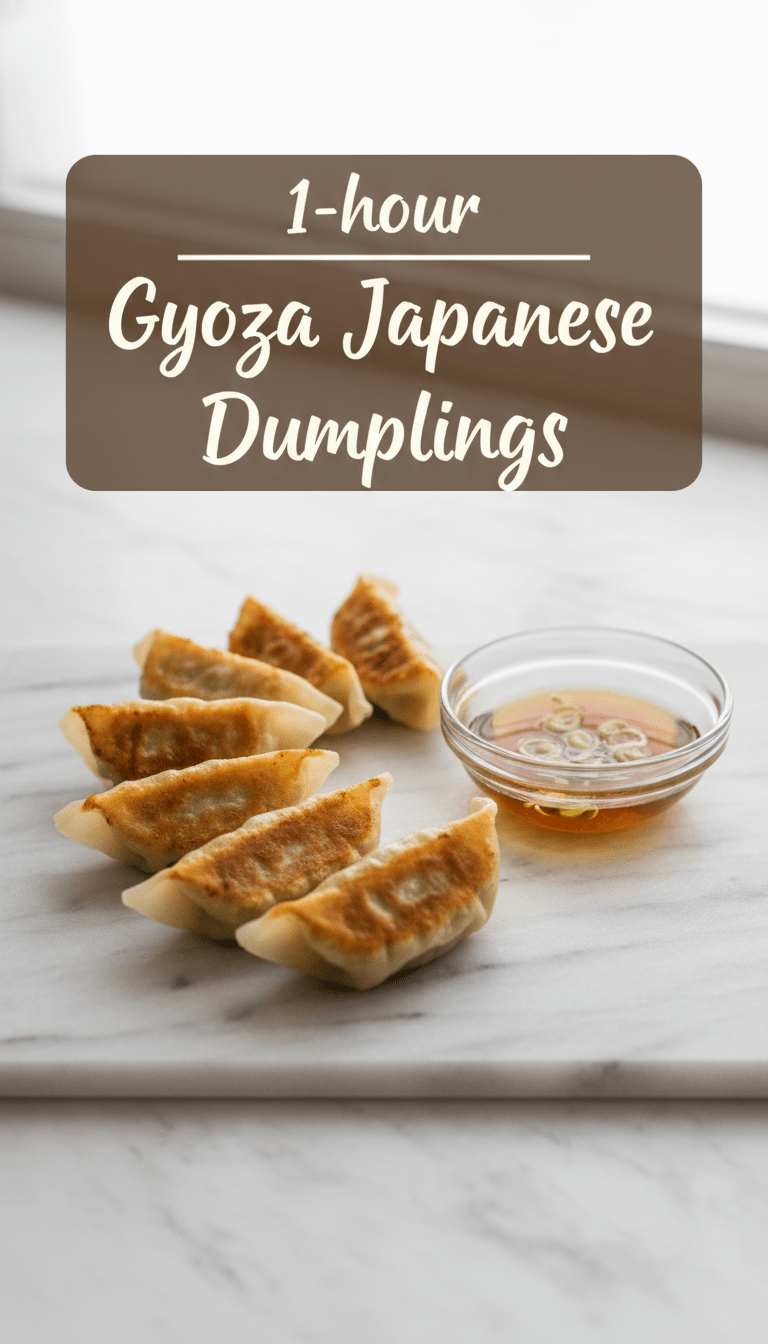
Hello, dumpling lovers! If you’ve ever been to a cozy Japanese izakaya or ordered takeout and found yourself dreaming about those perfectly pleated, pan-fried pockets of savory goodness, then you are in the right place. Today, we’re diving deep into making authentic Japanese Gyoza right in your own kitchen. Forget the freezer aisle; these homemade beauties are ridiculously easy to make and taste a million times better. Get ready for that heavenly crunch followed by a burst of umami-filled filling!
Quick Facts
Let’s get down to brass tacks so you can plan your cooking adventure!
Prep time: 30 minutes
Cooking time: 15 minutes
Total time: 45 minutes (plus optional chilling time)
Serving size: Makes about 30-35 dumplings
Why You’ll Love This Recipe
Why settle for store-bought when you can achieve perfection at home?
- Texture Heaven: This recipe guarantees the signature yaki-gyoza experience—crispy, golden-brown bottoms and soft, steamy tops.
- Flavor Bomb: The filling is seasoned perfectly with ginger, garlic, and soy, making every bite satisfying.
- Great for Freezing: Make a huge batch! They freeze beautifully for instant, delicious meals later.
- Interactive Fun: Folding dumplings is a fantastic activity to do with friends or family.
Ingredients You’ll Need
We’ll break this down into the filling and the dipping sauce.
For the Gyoza Filling
- 1 pound ground pork (or a mix of pork and ground chicken)
- 1 cup finely shredded Napa cabbage (or regular green cabbage)
- 1/2 cup finely chopped garlic chives (Nira) or regular chives
- 3 cloves garlic, minced very finely
- 1 tablespoon fresh ginger, grated
- 2 tablespoons soy sauce
- 1 tablespoon Sake (optional, but adds depth)
- 1 teaspoon sesame oil
- 1/2 teaspoon salt
- 1/4 teaspoon black pepper
- 1 package of round gyoza wrappers (about 30-35 wrappers)
For the Dipping Sauce (The Magic!)
- 3 tablespoons soy sauce
- 2 tablespoons rice vinegar
- 1 teaspoon chili garlic sauce or rayu (Japanese chili oil, optional for heat)
Step-by-Step Folding and Cooking Instructions
Making gyoza involves three main stages: preparing the filling, wrapping them up, and cooking them to golden perfection.
Step 1: Preparing the Filling
1. Prep the Cabbage: If using Napa cabbage, place the shredded cabbage in a bowl and sprinkle with a pinch of salt. Let it sit for 10 minutes. This draws out excess water.
2. Squeeze Dry: After 10 minutes, grab handfuls of the cabbage and squeeze out as much liquid as humanly possible. This is crucial to prevent soggy dumplings!
3. Mix Everything: In a large bowl, combine the squeezed cabbage, ground pork, chives, minced garlic, grated ginger, soy sauce, sake (if using), sesame oil, salt, and pepper.
4. Combine Thoroughly: Use your hands (gloves help!) or a spoon to mix the ingredients until they are just combined and slightly sticky. Do not overmix, or the meat will become tough.
Step 2: The Art of Folding
1. Set Up Your Station: Place a small bowl of water nearby. Lay out a wrapper on a clean surface. Keep the rest of the wrappers covered with a damp paper towel so they don’t dry out.
2. Fill It Up: Place about 1 heaping teaspoon of filling in the center of the wrapper. Be careful not to overfill!
3. Moisten the Edge: Dip your finger in the water and lightly wet the entire edge of the wrapper.
4. The Pleat: Fold the wrapper in half over the filling to form a half-moon shape, pinching the very center top together first. Starting from one side, create small, overlapping pleats on the front edge, pressing each pleat firmly against the flat back edge until you reach the other side. The back should remain flat.
5. Set Aside: Place the finished gyoza on a parchment-lined tray, making sure they don’t touch.
Step 3: The Pan-Fry and Steam Method (Yaki-Gyoza)
This is where the magic happens!
1. Heat the Oil: Heat 1 tablespoon of neutral cooking oil (like canola or vegetable) in a large non-stick skillet over medium-high heat.
2. Arrange: Once the oil is shimmering, carefully place the dumplings flat-side down in the pan, leaving a little space between each one. They should sizzle immediately. Cook for 2–3 minutes until the bottoms are beautifully golden brown.
3. Steam: Once golden, carefully pour about 1/2 cup of water (or slightly less) into the pan. It will bubble and steam intensely—be careful of splatter!
4. Cover and Cook: Immediately cover the skillet tightly with a lid and reduce the heat to medium-low. Let them steam for 6–8 minutes, or until the water has almost completely evaporated and the filling is cooked through.
5. Crisp Up: Remove the lid. Turn the heat back up to medium-high for the last minute to evaporate any remaining water and re-crisp the bottoms.
6. Serve Immediately: Gently slide a spatula under the gyoza to lift them out, keeping the crispy side facing up.
Step 4: Mixing the Dipping Sauce
While the last batch is cooking, quickly whisk together the soy sauce, rice vinegar, and chili oil (if using) in a small bowl. Done!
Serving Suggestions
Gyoza are fantastic on their own as an appetizer or snack, but they make a fantastic main meal alongside:
- A simple bowl of steamed white rice.
- A light cucumber salad dressed with sesame oil.
- A piping hot bowl of miso soup.
Tips for Customization and Variations
Want to switch things up? Gyoza are incredibly versatile!
- Vegetarian Delight: Replace the pork with finely chopped shiitake mushrooms, crumbled firm tofu (squeezed dry!), and extra cabbage and carrots.
- Shrimp Power: Substitute half the pork with finely chopped raw shrimp for a lighter, sweeter flavor profile.
- Spice It Up Inside: Add a pinch of Gochugaru (Korean chili flakes) to the filling mix for internal heat.
- Wrapper Hacks: If you can’t find round gyoza wrappers, round wonton wrappers work in a pinch, though they are usually a bit thicker.
Nutritional Information (Estimated per 5 Dumplings)
Please note: This is an estimate and varies heavily based on the fat content of the pork and oil used for frying.
Estimated Calories: 250–300
Estimated Protein: 15g
Estimated Fat: 15g
Estimated Carbohydrates: 20g
Frequently Asked Questions (FAQs)
Can I boil or deep-fry my gyoza instead?
Yes! If you boil them, they become sui-gyoza (soup dumplings), which are softer. If you deep-fry them, they become age-gyoza (fried dumplings), which are crunchy all over. The pan-fry/steam method gives you the best contrast!
Why are my dumplings tearing while folding?
This usually happens if the wrappers dry out. Make sure you keep the stack of unused wrappers covered with a slightly damp cloth or paper towel at all times while you are working.
Can I make the filling ahead of time?
Absolutely! You can prepare the filling up to 2 days in advance. Store it tightly covered in the refrigerator. It’s often easier to handle when it’s chilled!
How do I freeze uncooked gyoza?
Place the uncooked, folded gyoza on a parchment-lined baking sheet, making sure they don’t touch. Freeze them solid (about 1 hour). Once frozen, transfer them to a zip-top freezer bag. Cook them straight from frozen, adding an extra 2–3 minutes to the steaming time.
Happy dumpling making! Let me know in the comments how your first batch turned out!
