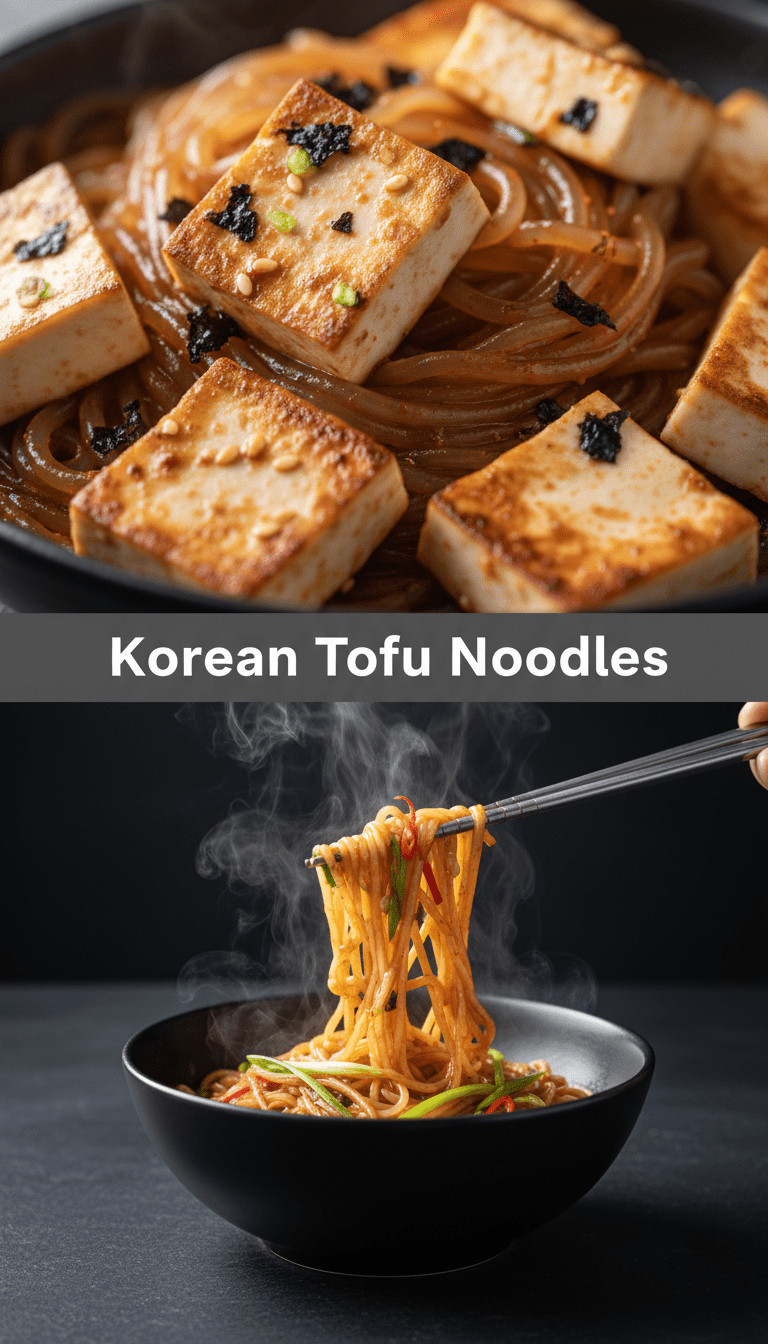
Hey food lovers! Are you looking for a meal that’s light, incredibly flavorful, packed with protein, and comes together faster than your favorite K-drama episode? Well, look no further! Today, I’m sharing my absolute favorite recipe for Korean Tofu Noodles (often inspired by flavors similar to Japchae but focusing on tofu as the star). This dish is vibrant, savory, slightly sweet, and trust me, once you try it, it’ll be in your regular rotation. Let’s get cooking!
Quick Facts Snapshot
Here’s everything you need to know before you dive in:
Prep time: 15 minutes
Cooking time: 20 minutes
Total time: 35 minutes
Serving size: 2 generous portions
Why You’ll Love This Recipe
What’s not to love? This recipe is a game-changer for several reasons:
- Protein Powerhouse: Firm tofu takes center stage, making it a satisfying vegetarian meal.
- Flavor Bomb: The sauce uses classic Korean pantry staples like soy sauce, sesame oil, and a touch of gochugaru (Korean chili flakes) for a perfect balance.
- Speedy Supper: It truly takes under 40 minutes, making it ideal for busy weeknights.
- One-Pan Wonder (Almost!): Minimal cleanup is always a win in my book!
Gather Your Goodies: Ingredients List
This recipe relies on pantry staples and fresh veggies. Make sure you grab firm or extra-firm tofu for the best texture!
For the Tofu & Noodles:
- 1 block (about 14 oz) extra-firm tofu, pressed well and cubed
- 8 oz dried noodles (I recommend sweet potato glass noodles (dangmyeon) or thin spaghetti if you can’t find them)
- 1 tablespoon neutral oil (like canola or vegetable)
- 1 small carrot, thinly sliced into matchsticks
- 1/2 medium onion, thinly sliced
- 2 cups mixed vegetables (spinach, sliced mushrooms, or bell peppers work great)
For the Savory Korean Sauce:
- 4 tablespoons soy sauce (use tamari for gluten-free)
- 2 tablespoons brown sugar or maple syrup
- 1 tablespoon toasted sesame oil
- 1 tablespoon rice vinegar
- 1 teaspoon grated fresh ginger
- 2 cloves garlic, minced
- 1/2 teaspoon gochugaru (Korean chili flakes, optional, for a mild kick)
- 1/4 cup water or vegetable broth
For Garnish:
- Toasted sesame seeds
- Sliced green onions
Step-by-Step: Creating Magic
Don’t be intimidated by the steps; we’re just cooking in stages!
Step 1: Prep the Tofu & Noodles
1. Press the Tofu: If you haven’t already, press your tofu for at least 15 minutes to remove excess water. Cut it into bite-sized cubes.
2. Cook Noodles: Bring a pot of water to a boil. Cook your chosen noodles according to package directions until tender but still slightly chewy (al dente). Drain them immediately and rinse briefly with cool water to stop the cooking process. Set aside.
Step 2: Sauté the Tofu
1. Heat the neutral oil in a large skillet or wok over medium-high heat.
2. Add the cubed tofu and cook, stirring occasionally, until golden brown and slightly crispy on several sides (about 5-7 minutes). Remove the tofu from the skillet and set it aside.
Step 3: Sauté the Veggies
1. In the same skillet, add a tiny splash more oil if needed. Add the sliced onions and carrots. Sauté for 3 minutes until they start to soften.
2. Add your remaining vegetables (mushrooms/spinach) and cook for another 2-3 minutes until crisp-tender.
Step 4: Whisk and Combine
1. While the vegetables cook, quickly whisk together all the Savory Korean Sauce ingredients in a small bowl.
2. Pour the sauce mixture over the vegetables in the skillet. Let it bubble gently for about 1 minute until it thickens slightly.
Step 5: Bring it All Together
1. Return the cooked tofu to the skillet. Toss gently to coat everything in the sauce.
2. Add the drained noodles to the pan. Use tongs to gently mix everything until the noodles are evenly coated in the delicious sauce and heated through (about 2 minutes).
Step 6: Serve and Garnish
1. Divide the noodles and tofu mixture between serving bowls.
2. Sprinkle generously with toasted sesame seeds and sliced green onions. Enjoy immediately!
How to Serve Your Noodles
These Korean Tofu Noodles are fantastic as a main course on their own, but if you want to bulk up the meal, try serving them alongside:
- A simple side of quick pickled radishes (Musaengchae).
- Steamed broccoli or green beans.
- A simple kimchi on the side for that extra fermented tang!
Tips for Customization & Variations
This recipe is super flexible! Here are a few ways I love to switch things up:
- Make it Spicy: Increase the gochugaru to 1 full teaspoon, or add a drizzle of gochujang (Korean chili paste) right into the sauce mix.
- Add More Crunch: Toss in some julienned cucumber or thinly sliced cabbage right at the very end so they stay raw and crunchy.
- Different Protein: If you’re not strictly vegetarian, marinated sliced beef or chicken breast works beautifully here too! Just cook the meat first, set aside, and return it with the tofu.
- Crispier Tofu Hack: For super crispy tofu, toss the cubed tofu in 1 tablespoon of cornstarch before frying it in Step 2.
Estimated Nutritional Snapshot
Please remember this is a rough estimate and depends heavily on the exact products used (especially noodles and sugar).
This dish is generally:
- High in Protein: Thanks to the tofu.
- Moderate in Carbohydrates: Depending on the noodle type chosen.
- Lower in Saturated Fat: If you don’t use too much added oil.
- Calories per serving (estimate): 450-550 calories.
Frequently Asked Questions (FAQs)
Q1: Can I make the sauce ahead of time?
A: Yes, absolutely! You can whisk the sauce ingredients together and store them in an airtight container in the fridge for up to 3 days. Just give it a quick stir before pouring it over your veggies.
Q2: My noodles turned sticky after draining. What went wrong?
A: That often happens with sweet potato noodles (dangmyeon). To prevent sticking, make sure you rinse them briefly under cool water immediately after draining them. The cold water stops the cooking process and washes away excess starch.
Q3: Can I use silken tofu instead of firm tofu?
A: I strongly advise against it for this particular recipe. Silken tofu is too delicate; it will break apart when you try to stir-fry it. You need firm or extra-firm tofu so it holds its shape during cooking.
Q4: What is Gochugaru and can I skip it?
A: Gochugaru is Korean chili powder, known for its bright red color and mild, fruity heat. You can definitely skip it if you dislike spice, but it does add an authentic layer of flavor! If you skip it, perhaps add a tiny pinch of paprika for color.
Happy cooking, everyone! I can’t wait for you to try these incredibly flavorful Korean Tofu Noodles! Let me know in the comments how yours turned out!
