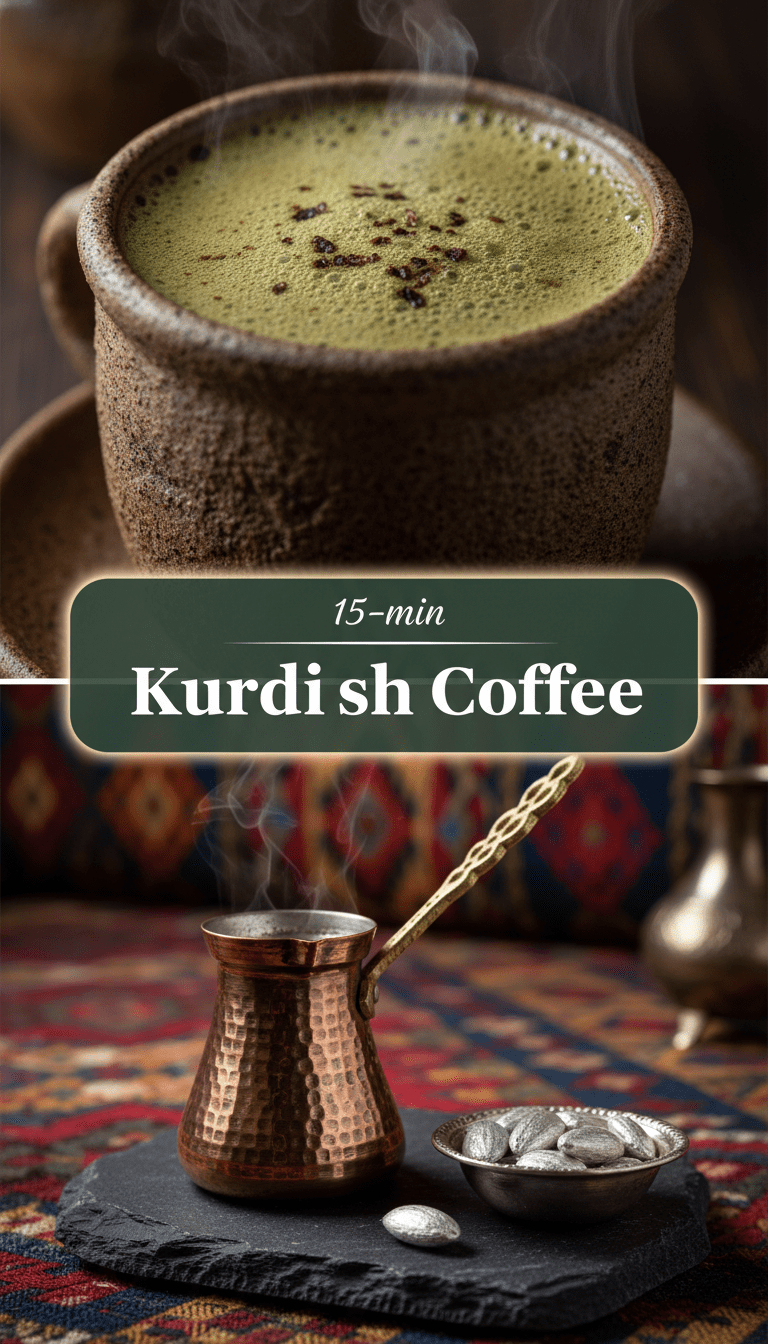
Hello, coffee lovers! Are you tired of the same old drip coffee routine? Do you crave something richer, perhaps with a hint of spice and a whole lot of tradition? Well, pull up a comfy chair because today, we’re diving deep into the heart of Kurdish culture with a brew that’s both invigorating and incredibly comforting: Kurdish Coffee.
This isn’t just about caffeine; it’s a ritual. It’s about connection, patience, and savoring every moment. Trust me, once you try this beautifully fragrant, finely ground delight, your mornings will never be the same. Let’s get brewing!
Quick Facts
Here’s what you need to know before you start:
Prep time: 2 minutes
Cooking time: 5-7 minutes
Total time: About 10 minutes
Serving size: 2 small, traditional cups
Why You’ll Love This Recipe
This recipe offers an experience, not just a beverage.
- Incredibly Aromatic: The addition of cardamom makes this coffee smell like a spice market exploded in your kitchen—in the best way possible!
- Rich and Velvety: Because it’s unfiltered, the fine grounds create a thick, luxurious texture unlike standard filtered coffee.
- A Taste of Tradition: Making Kurdish coffee connects you directly to a rich cultural heritage. It’s slow living in a cup!
- Perfectly Customizable: You control the sugar, making it exactly how you like it, from intensely strong to slightly sweet.
Gather Your Supplies: The Ingredients
The beauty of Kurdish coffee is its simplicity. You don’t need fancy equipment, just quality ingredients.
- Water: 1.5 cups cold, filtered water (essential for a clean taste).
- Coffee: 3 heaped teaspoons of very, very finely ground coffee. (It should be almost powder-like—finer than espresso grind).
- Cardamom: 1/2 teaspoon ground green cardamom (or 3-4 lightly crushed green cardamom pods).
- Sugar (Optional): 1 to 3 teaspoons, depending on your preference (see instructions below for how to incorporate this).
Note on equipment: Traditionally, this is made in a cezve or ibrik (a small, long-handled pot). If you don’t have one, a very small saucepan will work.
Brewing Magic: Step-by-Step Instructions
Patience is key here. We are coaxing the flavor out, not boiling it aggressively.
Step 1: Combine the Cold Start
Pour the cold water into your cezve or small saucepan. Add the coffee grounds and the ground cardamom (and sugar now, if you are using it—see the section below on sweetness levels).
Step 2: The Gentle Stir
Use a spoon to gently stir the mixture just once or twice, ensuring the coffee and spices are wet. Do not stir again after this point! Stirring introduces air bubbles which can ruin the creamy foam we are aiming for.
Step 3: Heat it Up Slowly
Place the pot over low to medium-low heat. The goal is a very slow simmer. Watch it closely! This slow heating process extracts the deep flavors from the fine grounds and cardamom.
Step 4: Watch for the Rise
As the coffee heats, a dark, rich foam (known as qeshm in Kurdish culture) will start to form on the surface. This is the moment of truth! Just as the foam begins to rise up the sides of the pot—but before it bubbles over—immediately remove the pot from the heat.
Step 5: The First Pour (The Foam Distribution)
Carefully spoon a little bit of that beautiful foam from the top of the pot into each serving cup. This ensures everyone gets a perfect layer of froth.
Step 6: Reheat for the Second Rise
Return the pot to the very low heat. Let it heat up again until it rises almost to the top, but again, pull it off before it boils over. This second heating deepens the flavor.
Step 7: The Final Pour
Pour the remaining coffee slowly into the cups, pouring down the side of the cup rather than directly into the center. This helps preserve the foam layer you already distributed. Let the coffee settle for about a minute before serving to allow most of the grounds to sink to the bottom.
Serving Suggestions: A Moment of Tradition
Kurdish coffee is best served in small, decorative cups—often demitasse size. It is traditionally served with:
- Dates or Sweets: A small piece of Turkish delight (lokum), a date, or a piece of dark chocolate is perfect to balance the intense coffee flavor.
- Water: Always serve a glass of cool water alongside. This is used to cleanse the palate before taking the first sip of coffee.
Tips for Customization & Variations
The beauty of making it at home is tailoring it to your taste!
- Sweetness Levels: In Kurdish tradition, the sugar is added right at the beginning:
Sâdâ* (Plain): No sugar added.
Nivî* (Medium): Add 1 teaspoon of sugar per cup measurement.
Şîrîn* (Sweet): Add 2-3 teaspoons of sugar per cup measurement.
- Spice It Up: For an extra layer of warmth, add a tiny pinch of fresh grated ginger along with the cardamom.
- Don’t Drink the Sludge: Remember, this is unfiltered! You drink the liquid part, leaving the thick sediment (the mud) at the bottom of the cup.
Nutritional Information (Estimated per Serving)
This is purely based on the coffee and water, assuming you add 1 teaspoon of sugar.
- Calories: 10-15 (varies based on sugar)
- Caffeine: High (similar to a strong espresso shot)
- Fat & Protein: Negligible
Frequently Asked Questions (FAQs)
Q: Can I use a regular coffee grinder?
A: You can, but for the authentic texture, you really need a burr grinder set to its finest setting, or ideally, purchase it pre-ground as “Turkish” or “Kurdish” coffee. If the grind is too coarse, the coffee won’t yield the proper foam or thick body.
Q: Why did my coffee boil over immediately?
A: You likely had the heat too high, or you stirred the coffee after the initial combination. The foam rises rapidly when the heat is too aggressive. Always use low heat and watch like a hawk!
Q: What do you do with the grounds left in the cup?
A: Nothing! They are traditionally left behind. In some cultures, people read fortunes in the dried grounds after they finish drinking, but otherwise, they go straight into the compost.
Enjoy this rich, aromatic journey into Kurdish hospitality. Happy brewing, friends! Let me know in the comments how your first cup turned out!
