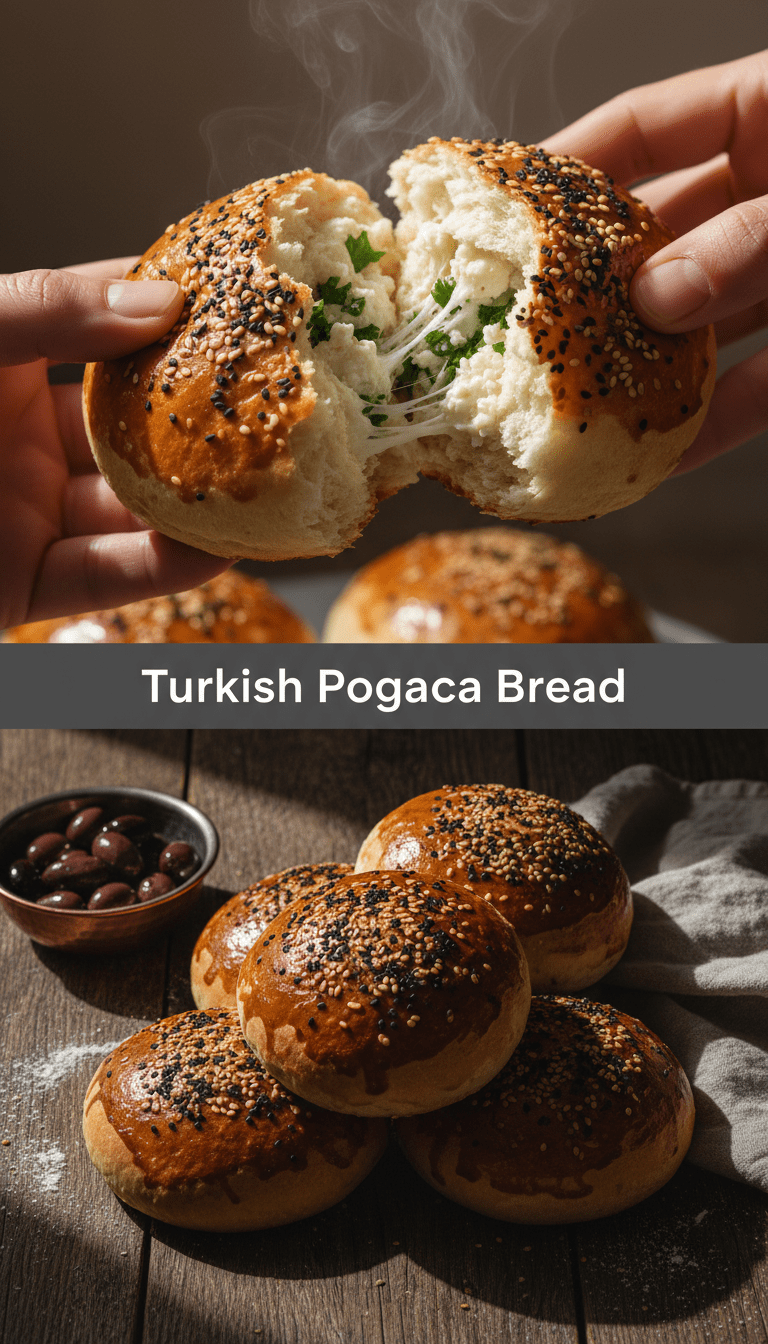
Hello, fellow food lovers! Are you ready to fall head over heels for a bread that is unbelievably soft, wonderfully buttery, and just melts in your mouth? Today, we are diving deep into the wonderful world of Turkish baking to bring you a recipe for Turkish Pogaca Bread.
Pogaca (pronounced poh-AH-cha) is a staple in Turkish households. Think of it as the ultimate savory pastry—perfect for breakfast, fantastic with tea, or even as an appetizer. Some are plain, some are cheesy, and some are even filled with potatoes! My version today focuses on the classic, slightly tangy, incredibly airy ‘plain’ version that you can customize later. Trust me, once you make these, you’ll never look back!
Quick Facts
Here is what you need to know before you start kneading that dough!
Prep time: 30 minutes (plus 1 hour resting time)
Cooking time: 18–20 minutes
Total time: Approximately 1 hour 50 minutes
Serving size: Makes about 12 medium-sized pogaca
Why You’ll Love This Recipe
This isn’t just any bread; it’s a sensory experience!
- Incredibly Soft Texture: The secret lies in using yogurt and a touch of oil, which keeps these rolls unbelievably tender, even the next day.
- Simple Ingredients: You likely have everything needed for this recipe in your pantry right now!
- Versatile Magic: They are perfect plain, but they serve as the best vehicle for cheese, herbs, or olives.
- The Aroma: While baking, your kitchen will smell like a wonderful Turkish bakery!
Gather Your Goodies: Ingredients List
We need ingredients for the dough and a little something for the egg wash topping.
For the Pogaca Dough:
- 3 cups (about 380g) all-purpose flour, plus extra for dusting
- 1 teaspoon instant dry yeast
- 1 teaspoon granulated sugar
- 1 teaspoon salt
- 1/2 cup (120ml) lukewarm milk
- 1/2 cup (120g) plain yogurt (full-fat works best)
- 1/3 cup (80ml) vegetable oil or melted butter
- 1 large egg, beaten (optional, for extra richness—reserve the second egg for the wash!)
For the Topping:
- 1 large egg yolk
- 1 tablespoon milk or water
- A sprinkle of sesame seeds or nigella seeds (black seeds)
Let’s Get Baking! Step-by-Step Instructions
Making pogaca involves three main phases: mixing the dough, letting it rest, and shaping/baking.
Step 1: Activating the Yeast (The Dry Mix)
In a large mixing bowl, whisk together the flour, yeast, sugar, and salt. Make a little well in the center.
Step 2: Bringing the Wet Ingredients Together
In a separate bowl, lightly whisk together the lukewarm milk, yogurt, oil (or melted butter), and the single beaten egg (if using one in the dough).
Step 3: Kneading the Soft Dough
Pour the wet mixture into the dry ingredients. Start mixing with a spoon, then move to your hands. Knead the dough on a lightly floured surface for about 5 to 7 minutes until it becomes smooth, soft, and slightly tacky, but not overly sticky. It should feel beautifully elastic.
Step 4: The Essential Rest
Place the dough ball into a lightly oiled bowl. Cover it with plastic wrap or a clean kitchen towel. Let it rest in a warm spot for about 1 hour, or until it has doubled in size. Patience, young baker!
Step 5: Shaping Your Pogaca
Gently punch down the risen dough to release the air. Divide the dough into 12 equal pieces. Roll each piece into a smooth ball, then gently flatten it into a disc about 1/2 inch thick in the palm of your hand. This is where you can add fillings if you choose (see customization below!). Fold the edges up and over to seal it again, then gently shape it back into a slightly flattened round or oval shape.
Step 6: The Final Proof
Place the shaped pogaca on a baking sheet lined with parchment paper, leaving about an inch between each one. Cover them loosely again and let them rest for a final 15–20 minutes. They should puff up slightly. Preheat your oven to 375°F (190°C) during this time.
Step 7: The Golden Glaze and Bake
Whisk the reserved egg yolk with 1 tablespoon of milk or water until smooth. Gently brush this mixture over the top of each pogaca. Sprinkle generously with sesame or nigella seeds.
Bake for 18 to 20 minutes, or until they are beautifully golden brown on top and sound hollow when tapped.
Serving Suggestions
Turkish Pogaca are versatile! Here are my favorite ways to enjoy them:
1. Classic Tea Time: Serve them warm alongside a strong cup of Turkish black tea (çay).
2. Breakfast Spread: Split them open and spread with butter, clotted cream (kaymak), or homemade jam.
3. Savory Side: Use them in place of dinner rolls with soups or stews.
Tips for Customization & Variations
The beauty of pogaca is how easily you can adapt the filling!
- Cheese Lovers: Before sealing the dough (Step 5), place a small tablespoon of crumbled feta or a mixture of feta and fresh parsley inside the center of the flattened disc.
- Potato Power: Mash some boiled potatoes with sautéed onions, salt, and pepper. Use this savory mixture as your filling.
- Herbaceous Twist: Mix 1/4 cup of finely chopped dill or chives directly into the dough before the final rest.
Nutritional Information (Estimated)
Please note: This is a rough estimate per plain roll, without filling.
Calories: 180–220 kcal
Protein: 6g
Fat: 10g
Carbohydrates: 22g
Frequently Asked Questions (FAQs)
Q: Can I make this dough ahead of time?
A: Yes! You can make the dough, let it rise once, punch it down, and store it tightly wrapped in the refrigerator for up to 24 hours. You’ll need to let it come to room temperature for about 30 minutes before shaping.
Q: Why are my pogaca flat instead of fluffy?
A: This usually happens for two reasons: either you didn’t let the dough rise long enough in the first proof, or you didn’t let them rest for the short 15-minute proof before baking. Also, make sure your yeast is fresh!
Q: Can I freeze baked pogaca?
A: Absolutely! Baked pogaca freezes beautifully. Let them cool completely, place them in a freezer-safe bag, and freeze for up to 3 months. To reheat, simply thaw them slightly and bake at 300°F (150°C) for about 5–7 minutes until warmed through.
Happy baking, everyone! Let me know in the comments how your fluffy Turkish Pogaca turns out!
